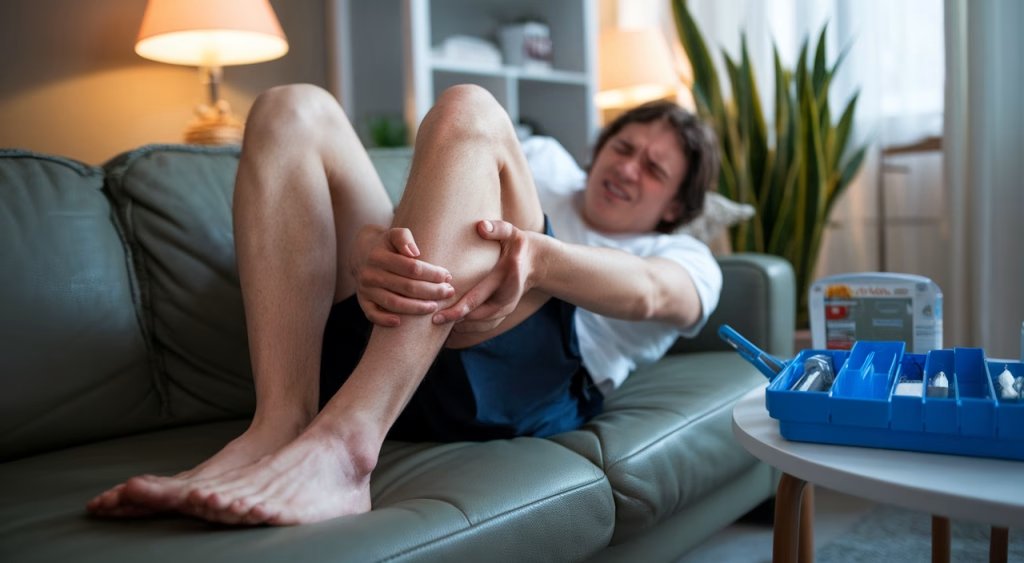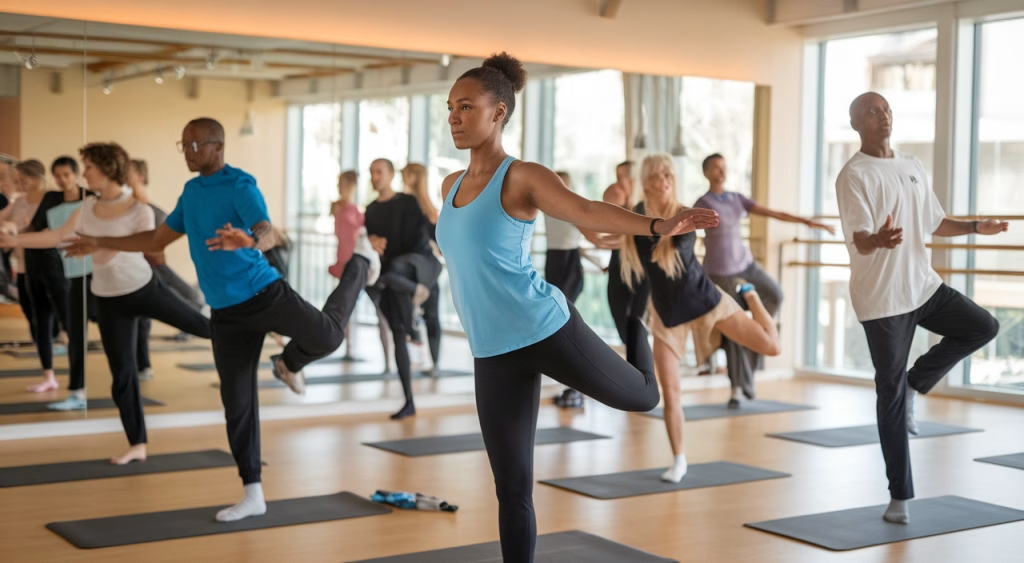
What is proprioception, and how does it affect your balance?
Proprioception is your body’s remarkable ability to sense its position, movement, and spatial awareness without relying on vision. Think of it as your internal GPS system—constantly working behind the scenes to keep you balanced and coordinated. This “sixth sense” is what allows you to walk in the dark, catch yourself when you stumble, or know exactly where your limbs are with your eyes closed. Whether you’re an athlete perfecting your game, a senior wanting to stay steady, or someone recovering from injury, improving proprioception is your key to better balance and confident movement.
TL;DR: Quick Guide to Mastering Proprioception and Balance
- Proprioception is your body’s internal GPS—essential for coordination and physical awareness.
- Strengthening it can improve balance, reduce injury risk, and aid in athletic performance and daily movements.
- Use simple home-based exercises like single-leg stands and stability drills to gradually train proprioception.
- Balance training is especially beneficial for athletes, seniors, and those recovering from injuries.
- Daily drills combined with mental focus can significantly reinforce body awareness and prevent stumbles or falls.
Importance of Balance and Proprioception
Balance isn’t just about standing on one leg—it’s a complex orchestra of your nervous system, muscles, joints, and proprioceptive sensors working in perfect harmony. When you improve proprioception, you’re essentially fine-tuning your body’s ability to respond instantly to changes in position or terrain. This enhanced body awareness is crucial for everyone: it helps athletes react faster and move with precision, gives seniors the confidence to navigate stairs and uneven surfaces safely, and aids injury recovery by retraining damaged neural pathways. Every step you take, every reach you make, relies on this sophisticated internal feedback system.
Understanding Proprioception
Proprioception works through specialized receptors called mechanoreceptors located in your muscles, joints, tendons, and skin. These tiny sensors constantly send information to your brain about body position, muscle tension, and joint angles. When functioning optimally, this system allows you to make split-second adjustments to maintain balance and coordinate complex movements—all without conscious thought.
However, injuries, aging, neurological conditions, or even prolonged inactivity can impair proprioceptive function. The good news? Research shows that targeted proprioception exercises can significantly restore and even enhance this vital sense, improving your balance, reducing fall risk, and boosting overall movement confidence.
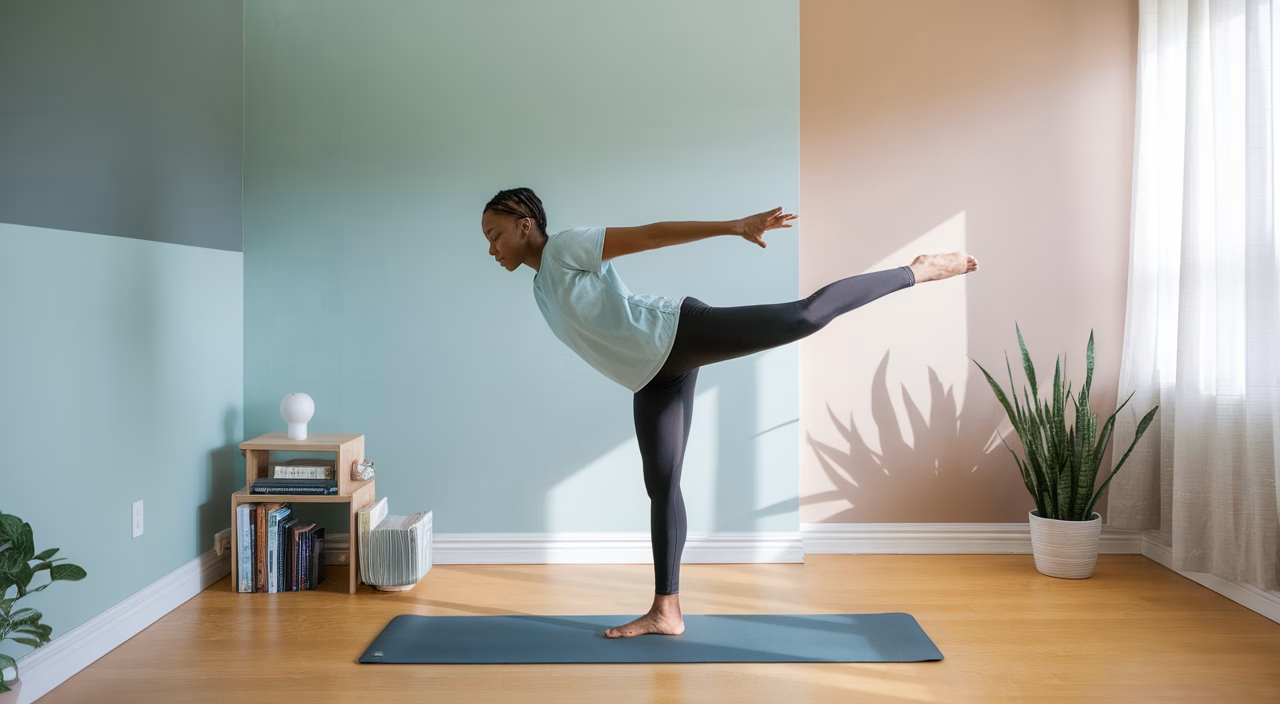
Key Exercises for Enhancing Balance
Ready to improve proprioception from the comfort of your home? These evidence-based exercises target your body’s balance systems and can be easily modified for any fitness level:
- Single-Leg Stance: Start by standing on one foot for 30 seconds, then progress by closing your eyes or standing on an unstable surface like a pillow.
- Heel-to-Toe Walk: Walk in a straight line placing one foot directly in front of the other. This classic balance exercise challenges your coordination and spatial awareness.
- Bosu Ball Balance: Standing or performing squats on this unstable surface forces your proprioceptive system to work overtime, strengthening deep stabilizing muscles.
- Y-Balance Reach: While standing on one leg, reach forward, sideways, and backward with the other—this exercise tests and improves your balance limits.
- Eyes-Closed Balance Drills: Remove visual feedback to force your proprioceptive system to take over, enhancing your body’s internal awareness.
Practical Tips for Daily Proprioception Practice
The beauty of proprioception training lies in its simplicity—you can improve balance throughout your day with these practical strategies:
- Brush your teeth on one foot: Transform your morning routine into a daily balance challenge that strengthens proprioception.
- Vary your walking surfaces: Walk on grass, sand, or gravel to challenge your balance system and improve proprioceptive responses.
- Practice mindful movement: Throughout the day, pause to mentally scan your posture and joint positions—this builds stronger mind-body connections.
- Go barefoot indoors: Walking without shoes activates the proprioceptive sensors in your feet and strengthens intrinsic foot muscles.
Remember, consistency trumps intensity when it comes to proprioception training. Just 5-10 minutes of daily practice can create lasting improvements in your balance and body awareness.
Role of Proprioception in Athletic Performance
Elite athletes understand that superior proprioception is often what separates good from great. When you can feel exactly where your body is in space and predict how it will move, you react faster, move more efficiently, and perform with greater precision. From a basketball player making a contested shot to a runner navigating uneven terrain, enhanced proprioception provides the competitive edge that makes the difference.
Benefits of Proprioception Training for Athletes
If you’re an athlete looking to elevate your performance, proprioception training delivers measurable benefits:
- Lightning-fast reactions: Feel and respond to body position changes before your conscious mind even registers them.
- Injury prevention: Significantly reduce your risk of ankle sprains, knee injuries, and other common sports injuries.
- Enhanced coordination: Execute complex multi-limb movements with greater fluidity and precision.
- Superior agility: Make sharp cuts, explosive starts, and controlled stops with confidence and control.
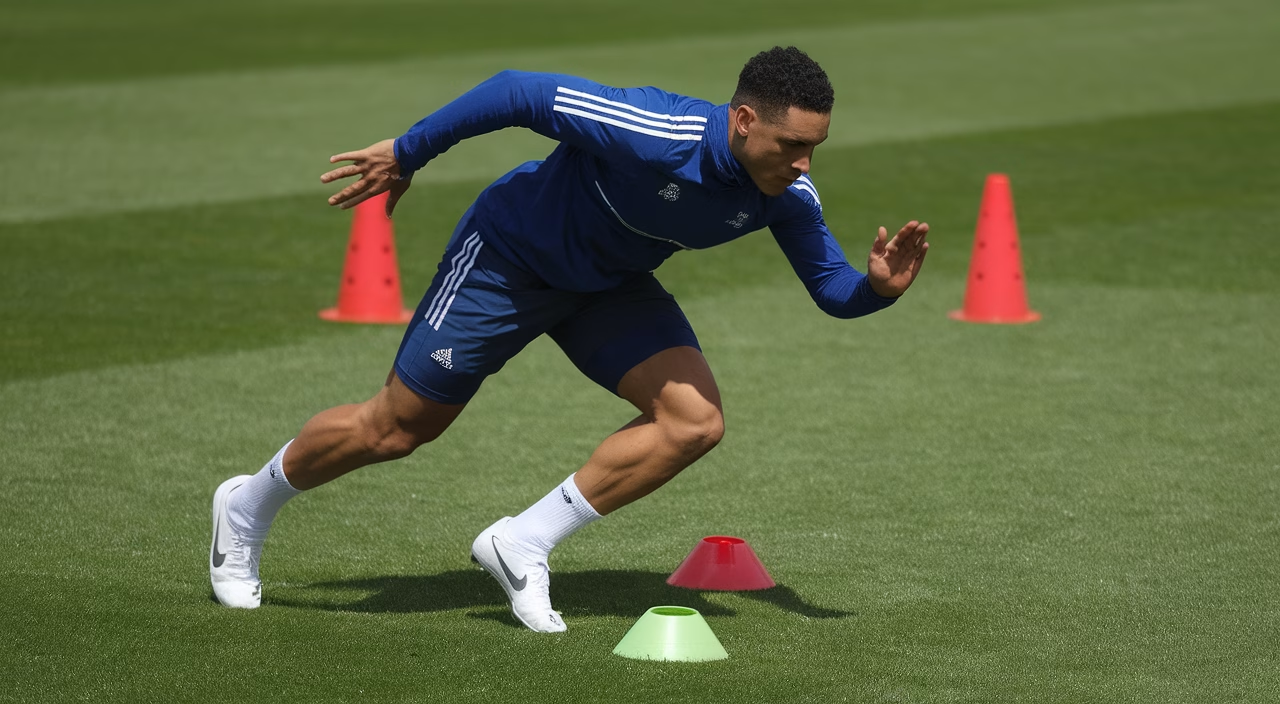
Proprioception Drills for Sports Performance
Take your athletic proprioception to the next level with these sport-specific training exercises:
- Lateral Band Walks: Build hip stability and knee awareness—essential for runners, jumpers, and cutting sports.
- Agility Ladder Precision Drills: Combine speed with controlled foot placement to develop neural precision and body awareness.
- Blindfolded Movement Training: Perform familiar movements with eyes closed to force reliance on proprioceptive feedback over visual cues.
- Reactive Balance Challenges: Have a partner create unexpected balance challenges to improve real-time proprioceptive responses.
Cost Guide: Building Proprioception Tools at Home
| Item | Price Range | Use Case |
|---|---|---|
| Balance Pad | $15 – $35 | Single-leg and stability drills |
| Resistance Bands | $10 – $25 | Joint support and tension training |
| Bosu Ball | $60 – $150 | Dynamic balance and core work |
| Foam Roller | $20 – $50 | Muscle prep and recovery |
Final Thoughts: Transform Your Movement with Better Proprioception
Mastering proprioception isn’t just about better balance—it’s about unlocking your body’s full potential for confident, coordinated movement. When you improve proprioception through consistent training, you’ll notice improvements in everything from your athletic performance to your ability to navigate daily activities with ease. The key is starting simple, staying consistent, and progressively challenging your balance system. Whether your goal is preventing falls, recovering from injury, or achieving peak athletic performance, developing your proprioceptive abilities will transform how you move through the world.
Frequently Asked Questions
- Does proprioception affect balance?
Yes, proprioception is the foundation of balance. It allows your body to sense shifts in position and correct itself without conscious effort. - What causes poor proprioception?
Injuries, aging, neurological conditions, and even fatigue can impair proprioceptive feedback, impacting stability and coordination. - Can you train proprioception at home?
Absolutely! Exercises like single-leg stands, agility drills, and mirror walks can be done with little or no equipment right at home. - Is proprioception the same as balance?
No, but they work together. Balance is the result; proprioception is a key tool your body uses to achieve it. - Why do athletes need proprioception training?
To react faster, prevent non-contact injuries, and move with greater accuracy under competitive stress. - Are there age-specific proprioception drills?
Yes, seniors benefit from stable and slow-paced movements, while athletes may use dynamic, reaction-based drills. - Can mental focus improve proprioception?
Definitely. Being mindful of movement enhances neuromuscular connections, especially during slow and controlled practice.