Can strengthening your glutes improve knee pain?
Yes — strengthening your glutes can significantly reduce knee pain by improving movement mechanics and lessening the load on your joints during activities like walking.
TL;DR Summary
- Gluteal muscle strength deficits impair how your hips and knees share the workload, leading to higher stress on your knees.
- Glutes are key for stabilizing your pelvis and controlling movement in the dynamic knee.
- When glutes are weak, the external knee adduction moment increases — a known risk factor for knee joint degeneration.
- We cover 3 science-backed exercises to strengthen weak gluteal muscles: hip abduction, glute bridges, and clamshells.
- Plus, get actionable tips for integrating these exercises into your routine to support long-term knee health and walking ability.
Understanding the Importance of Gluteal Muscle Strength
Your gluteal muscles — particularly the gluteus medius and gluteus maximus — are the unsung heroes of your body’s alignment and lower-limb mechanics. They manage a complex task: stabilizing your pelvis, balancing your stride, and absorbing the unpredictable forces when you walk, squat, or even just stand still.
When these powerful muscles become weak, a dangerous domino effect unfolds: your pelvis tilts, your knees collapse inward, and your body compensates in ways that invite injury — especially in the knee joint. Clinically, we call these problems gluteal muscle strength deficits, and they’re often the hidden culprit behind that nagging knee pain you feel during walking or physical activity.
Recognizing and addressing these deficits isn’t just about pain relief; it’s about protecting your joints, enhancing your performance, and preserving your mobility as you age.
The Link Between Gluteal Muscle Weakness and Knee Health
This connection isn’t just theory — it’s rooted in solid biomechanics. When your glutes don’t fire efficiently, the responsibility of controlling lower-limb motion shifts to surrounding structures like your knees and ankles. Unfortunately, these joints aren’t designed to handle that extra demand alone.
Exploring the External Knee Adduction Moment
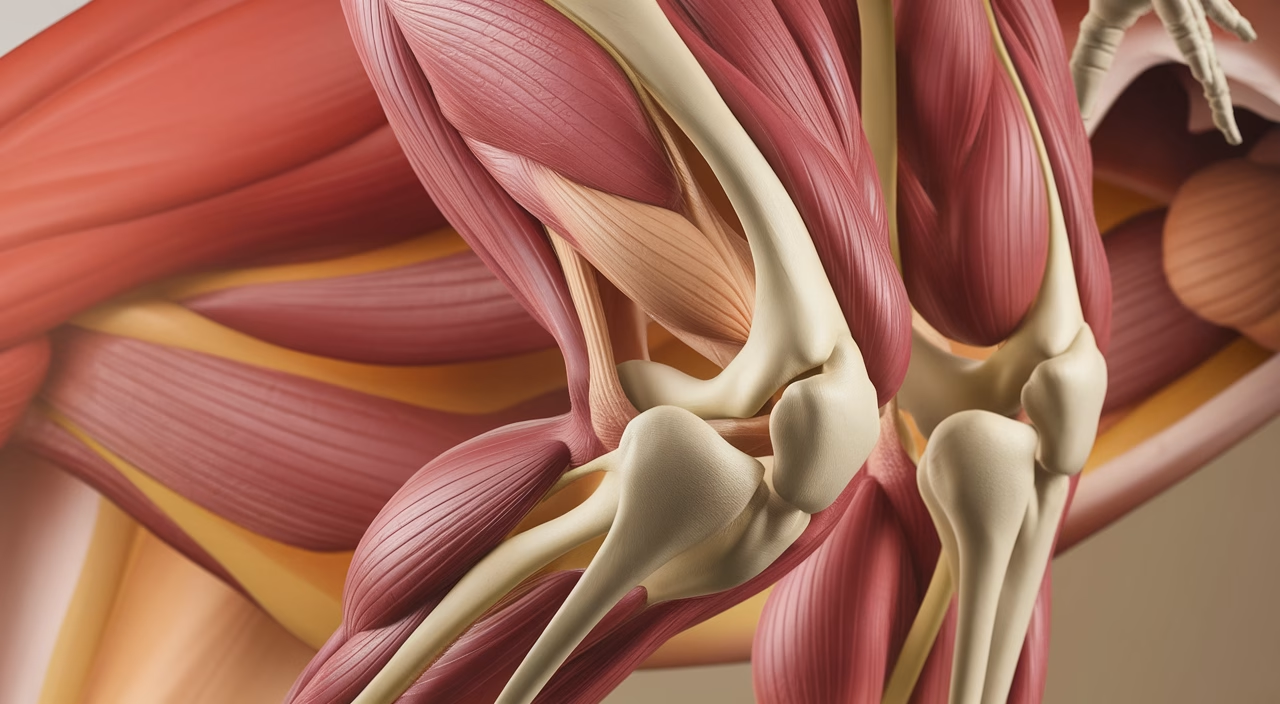
Here’s a crucial concept you need to understand: the external knee adduction moment (EKAM). Think of it as the sideways pressure crushing your knee’s inner compartment when you walk. Research shows that people with weak glutes experience dramatically increased EKAM — meaning their knees absorb far more punishment than they should.
This excessive force systematically destroys cartilage over time, fast-tracking issues like osteoarthritis. When your dynamic knee — your knee in motion — lacks proper control, you’re essentially grinding down your joint with every single step. That’s precisely why reinforcing hip strength is absolutely critical.
3 Effective Exercises to Strengthen Weak Gluteal Muscles
Let’s dive into three therapist-approved exercises that are both practical and incredibly powerful. You don’t need a fancy gym; consistency and proper form are your keys to success. These targeted movements are specifically designed to activate different parts of your glutes, directly counteracting gluteal muscle strength deficits that wreak havoc on your knees during walking.
Exercise 1: Hip Abduction
This proven exercise specifically targets your gluteus medius — the crucial side glute muscle. Strengthening it dramatically improves pelvic stability and realigns the forces traveling down your legs.
How to do it:
- Lie on your side with legs stacked and straight.
- Slowly lift the top leg to about 45 degrees, then lower with complete control.
- Perform 3 sets of 10–12 reps per side.
✅ Pro Tip: Add a resistance band above your knees to dramatically increase the challenge and accelerate your results.
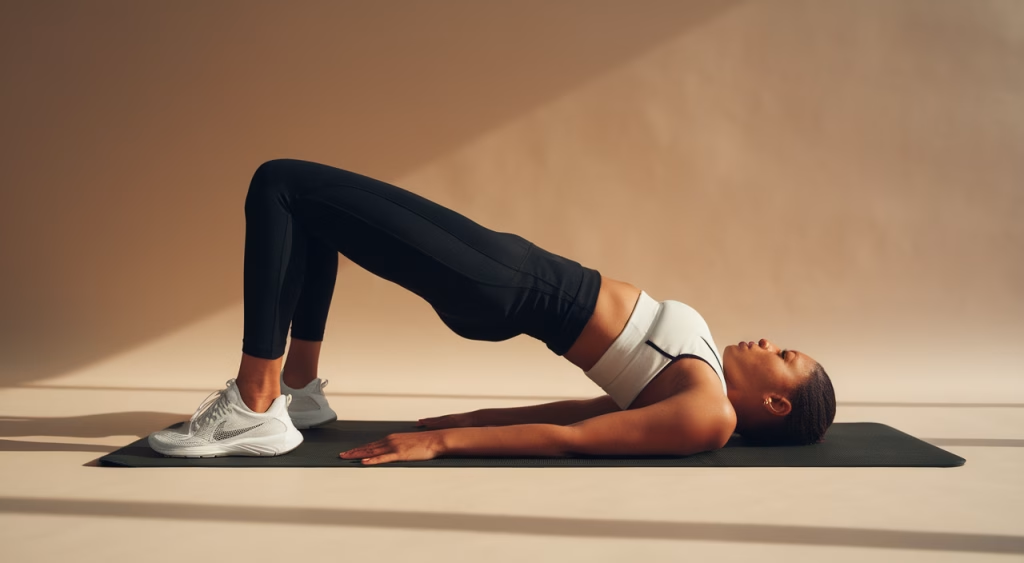
Exercise 2: Glute Bridges
This powerhouse movement targets your gluteus maximus — the largest muscle in your body. It reinforces hip extension, which significantly reduces load on your knees during walking and movements like climbing stairs.
How to do it:
- Lie on your back with knees bent and feet flat on the ground.
- Press through your heels to lift your hips until your body forms a perfect straight line from shoulders to knees.
- Squeeze your glutes hard at the top, then lower with control.
- Aim for 3 sets of 10–15 reps.
✅ Pro Tip: Pause and hold for 3–5 seconds at the top to maximize muscle engagement and build serious strength.
Exercise 3: Clamshell
This deceptively simple movement precisely targets the posterior glute medius — absolutely essential for steady walking and optimal dynamic knee control.
How to do it:
- Lie on your side with knees bent at 90 degrees, feet together.
- Keeping feet touching, lift your top knee like opening a clamshell.
- Control the descent and repeat for 10–15 reps, 3 sets per side.
✅ Pro Tip: Perform this exercise slowly to feel precise muscle activation and ensure you’re targeting the right muscles.
Tips for Integrating Glute Strengthening into Your Routine
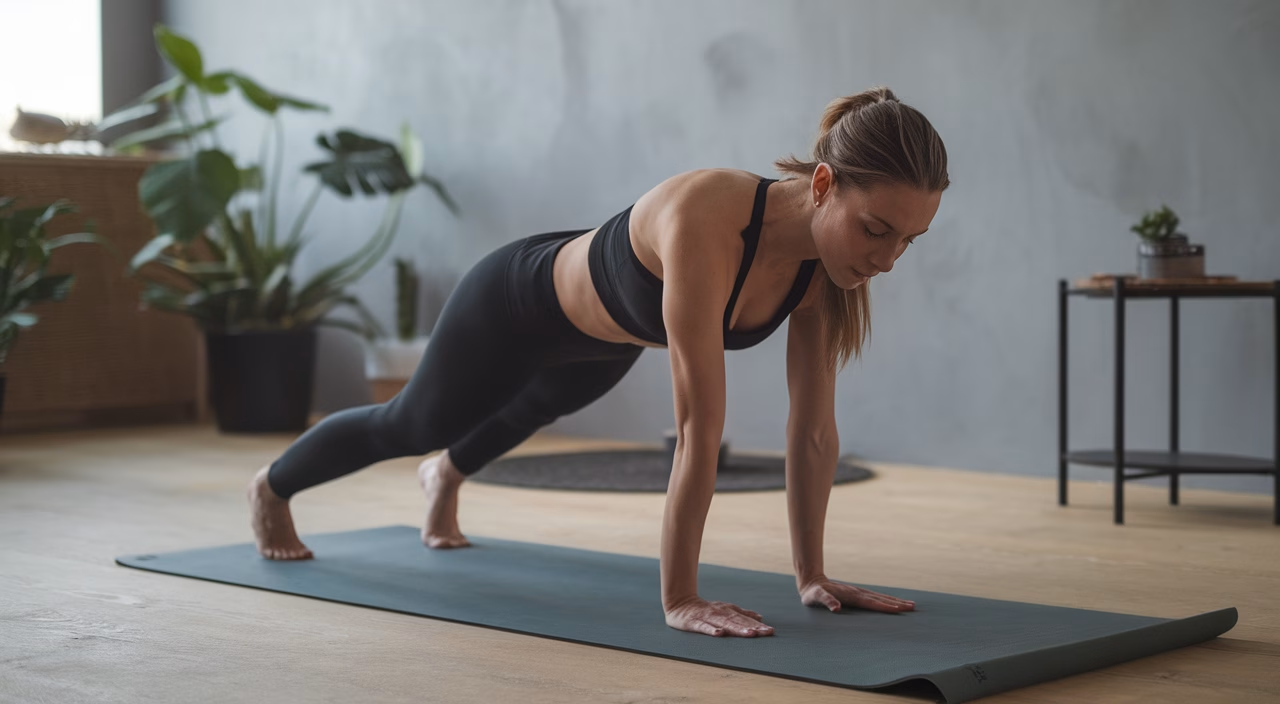
Knowing the exercises is just half the battle — making them a consistent routine is what delivers life-changing results. Here’s how to stick with it:
- Incorporate into your daily walk: After a brisk 10-minute walk, immediately do a set of glute bridges or clamshells while your muscles are warm.
- Stack with existing habits: Pair your glute routine with something you already do daily — like brushing your teeth or watching evening TV.
- Monitor your posture: Throughout the day, notice if your hips shift or knees cave inward when walking or standing. If they do — it’s time for a glute tune-up.
- Progress gradually: Increase reps or add light resistance weekly to keep building strength and prevent plateaus.
Conclusion: Empowering Your Lower Limb Health
If knee pain has been holding you back — whether on your morning walk or during stair climbs — don’t underestimate the power of your glutes. Addressing gluteal muscle strength deficits completely reshapes how force is distributed throughout your body, giving your knees the support they’ve been desperately craving.
Think of your muscles like a championship team. When every member performs their role perfectly, the whole system flows beautifully — and when your glutes lead correctly, your knees follow more safely and efficiently.
Frequently Asked Questions
Can weak glutes affect your knees?
Absolutely. Weak glutes cause excessive inward movement of the knee (valgus collapse), increasing stress on the joint and leading to pain or injury.
How do I know if I have gluteal muscle strength deficits?
Common signs include knee pain when walking, hip instability, and difficulty climbing stairs or standing on one leg.
How often should I train my glutes for better knee health?
Aim for at least 2–3 times per week. For best results, pair with mobility drills and good walking form.
Can walking alone improve glute strength?
While walking activates glutes, it’s not enough to correct deficits. Targeted strengthening is essential.
Is it ever too late to strengthen glutes and help my knees?
No — it’s never too late. Even beginner-level exercises can yield noticeable improvements in knee support and pain relief.
What’s the best time of day to do glute workouts?
Whenever you’re most consistent. Some people prefer mornings, others after work — just stick with what you’ll maintain.
Should I feel sore after glute exercises?
Mild soreness is normal, especially early on. But sharp pain — especially in the knees — means you should check your form or consult a professional.