
Why Does Hypermobility Cause Tight Chest Muscles and Rounded Shoulders?
When you have hypermobility, your joints move beyond their normal range — but that extra flexibility often comes with an unexpected downside: poor posture and tight chest muscles. The excessive looseness in your shoulder joints forces other muscle groups, particularly your chest muscles, to work overtime for stability. Over time, this compensation pattern leads to rounded shoulders and forward head posture that’s both uncomfortable and limiting.
TL;DR: Quick Answers to Correcting Rounded Shoulders from Hypermobility
- 🎯 The Problem: Hypermobility causes shoulder joint instability, forcing your chest muscles to compensate and pull your shoulders forward.
- 💪 Key Muscles Affected: Your pectoralis minor and major tighten to provide stability, creating the classic rounded shoulder posture.
- 🏋️ Best Fix: Combine targeted pec minor stretches with shoulder blade strengthening and posture retraining for lasting results.
- 🧘 Realistic Timeline: With consistent daily practice, you’ll notice posture improvements within 2–3 weeks — complete correction takes 3-6 months.
- 🚨 Bonus Tip: If you experience chest tightness or shoulder clicking, start slowly and modify exercises for your unique range of motion.
Introduction to Hypermobility and Posture Issues
Living with hypermobility means constantly balancing flexibility with stability. While you might enjoy impressive joint mobility, your hypermobile shoulders often create unexpected muscle tightness as your body tries to compensate for loose ligaments and joint capsules.
If you’ve noticed your shoulders rounding forward or felt persistent chest tightness that won’t release, hypermobility is likely the culprit. These postural changes aren’t just cosmetic — they affect your breathing, shoulder function, and can trigger headaches and upper back pain.
The encouraging news? These patterns are completely reversible with the right approach. We’ll explore the anatomy behind rounded shoulders with hypermobility and give you proven strategies for correcting rounded shoulders safely and effectively.
Understanding the Connection between Hypermobility and Rounded Shoulders
What is Hypermobility?
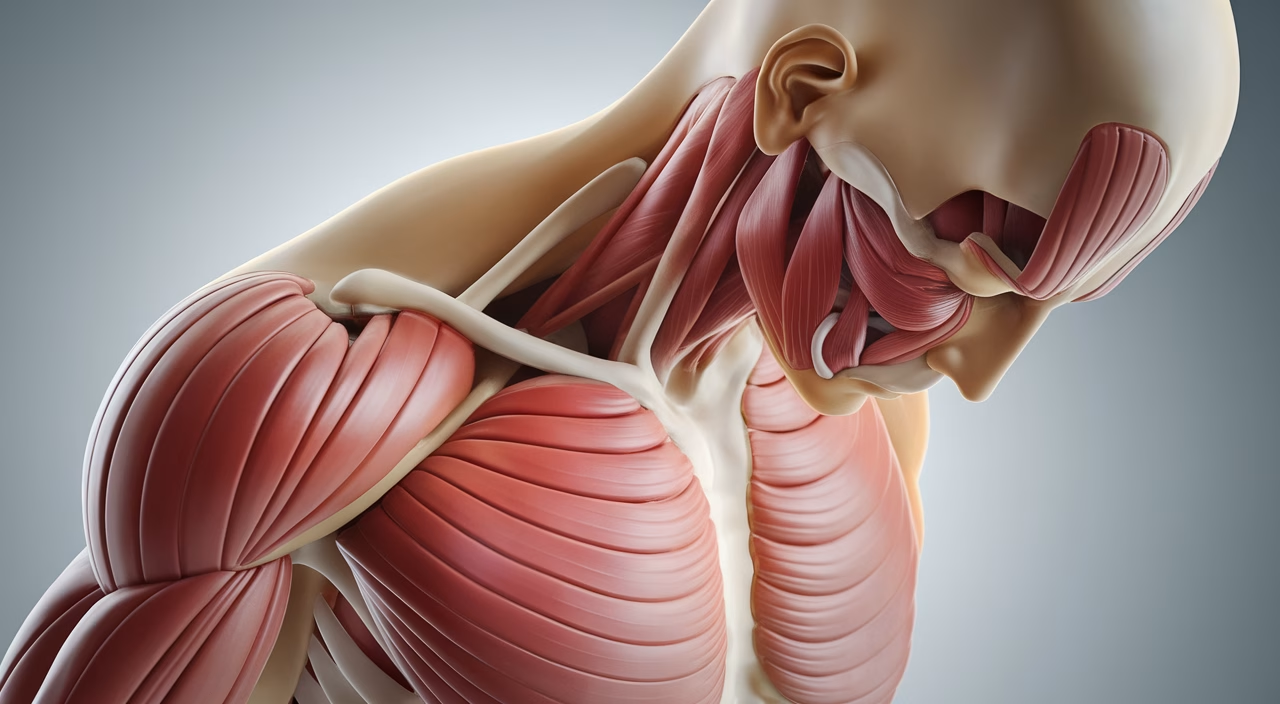
Hypermobility describes joints that move well beyond their typical range of motion. This can occur as part of conditions like Ehlers-Danlos Syndrome or as isolated joint flexibility. While it might seem advantageous for activities like yoga or dance, hypermobility creates stability challenges — especially when your loose ligaments can’t provide adequate joint support.
Your shoulder joint is naturally the most mobile in your body, and when you add hypermobility to the mix, the demand on surrounding muscles increases dramatically. This forces your chest muscles — particularly the pectoralis minor — to work constantly for stability, eventually leading to the tight, shortened state that pulls your shoulders forward.
Effects of Hypermobility on Posture
Because your hypermobile joints lack the passive stability that most people have, your nervous system compensates by recruiting nearby muscles to tighten up for support. In your shoulders, this typically means your pectoralis minor and major muscles become chronically overactive — gradually pulling your shoulders inward and rounding your upper back.
This adaptive posture becomes your new normal:
- Shoulders roll forward and inward
- Head projects forward beyond your chest
- Upper back rounds into excessive kyphosis
- Neck and trap muscles overwork to counterbalance
The end result? The familiar pattern of chest tightness, upper back pain, and compromised shoulder function that many with hypermobility experience.
Correcting Rounded Shoulders: Exercises and Stretches
Successfully correcting rounded shoulders with hypermobility isn’t about forcing perfect alignment — it’s about retraining your body to find balanced, relaxed support. The key is combining targeted stretches for tight chest muscles with strengthening exercises that restore proper shoulder blade function.
Hypermobility Shoulder Exercises
These hypermobility shoulder exercises target the specific muscle imbalances that create rounded shoulders. Focus on controlled movement quality rather than intensity, performing 2–3 sets of each exercise 3–4 times per week.
| Exercise | Focus | Modifications |
|---|---|---|
| Wall Angels | Retrains proper scapular movement | Reduce range if shoulders are tight |
| Prone Y-T-I Lifts | Strengthens posterior shoulder muscles | Use towel under chest for comfort |
| Resistance Band Rows | Builds scapular retraction strength | Start with very light resistance |
| Serratus Punches | Activates key scapular stabilizers | Perform against wall for support |
Pro tip: Wall Angels are particularly challenging for those with hypermobility and rounded shoulders. Keep your ribs down and only move through the range where you can maintain good form without pain or excessive arching.
Pec Minor Stretch for Hypermobility

Your pectoralis minor is often the primary driver behind tight chest muscles and rounded shoulders. This deep chest muscle runs from your ribs to your shoulder blade, and when shortened, it creates a powerful downward and forward pull that distorts your posture. Since daily activities like computer work and texting constantly shorten this muscle, targeted pec minor stretches are essential for posture correction.
Most Effective Pec Minor Stretches for Hypermobility:
- Wall Corner Stretch: Position yourself in a corner with arms at 90°, then gently lean forward until you feel a stretch across your chest.
- Doorframe Lean: Place your hands against a doorframe at shoulder height, then step forward until you feel the stretch.
- Foam Roller Chest Opening: Lie lengthwise on a foam roller with arms spread wide to open your entire anterior chain.
Hold each pec minor stretch for 30–60 seconds while breathing deeply. Remember, your hypermobile tissues respond better to gentle, sustained stretching — avoid bouncing or aggressive techniques that can irritate already sensitive tissues.
Tips for Improving Posture with Hypermobility
Since you can’t change your connective tissue’s natural flexibility, your best strategy is developing excellent body awareness and strategic muscle control. These practical tips will accelerate your progress in correcting rounded shoulders:
- Set Posture Reminders: Use phone alerts to check in with your shoulder blade position and gently draw your head back.
- Floor Reset Technique: Lie supine with knees bent for 5-10 minutes daily — this naturally realigns your spine.
- Practice Lateral Breathing: Rounded shoulders restrict your diaphragm, so focus on expanding your ribs sideways when breathing.
- Mirror Training: Exercise in front of a mirror to get visual feedback on symmetry and proper movement patterns.
- Track Your Symptoms: Note which movements cause clicking, nerve-like pain, or discomfort — then modify accordingly.
- Strengthen Before Stretching: Always activate your stabilizing muscles before deep stretching, especially after periods of inactivity.
Conclusion: Taking Charge of Your Posture with Hypermobility
Successfully correcting rounded shoulders when you have hypermobility goes far beyond improving your appearance — it eliminates pain, enhances breathing capacity, and boosts your confidence. The secret is understanding how your unique anatomy creates these patterns and choosing exercises that work with your natural mobility rather than against it.
You don’t need perfect posture to see dramatic improvements. With consistent daily action — like adding shoulder blade strengthening exercises or performing pec minor stretches after long periods at a desk — you gradually retrain your body to find its natural, balanced alignment.
Remember, it doesn’t matter how pronounced your rounded shoulders are right now. What matters is taking the first step toward better posture today and building sustainable habits that support your hypermobile body for life.
FAQ: Posture, Chest Muscles, and Hypermobility
- Can tight chest muscles affect the neck?
Absolutely. Tight pec muscles pull the shoulders forward, which over-engages neck and upper trap muscles — often leading to strain and headache. - How can I tell if my rounded shoulders are from hypermobility?
If you also experience joint clicking, instability, or bend easily in other joints, it’s possible your posture is related to hypermobility. A hypermobility shoulder test can help clarify. - Are pec minor stretches safe for hypermobility?
Yes, but you must perform them slowly, with breath and control. Avoid deep, passive stretches that yank the tissue. - Will my posture ever go back to normal?
With consistent practice and the right exercises, significant improvement is absolutely possible — even if perfect posture isn’t realistic. - Can hypermobility cause chest pain?
Yes. Muscle strain from overcompensating, rib subluxations, or nerve impingements caused by posture can lead to chest discomfort in hypermobile individuals. - Is it better to strengthen or stretch tight chest muscles?
Both — stretch safely to open, then strengthen posterior muscles to stabilize. Stretching alone won’t resolve posture. - What if I feel worse after these exercises?
Listen to your body. Modify or pause if pain worsens. A physical therapist with hypermobility experience can personalize your plan.