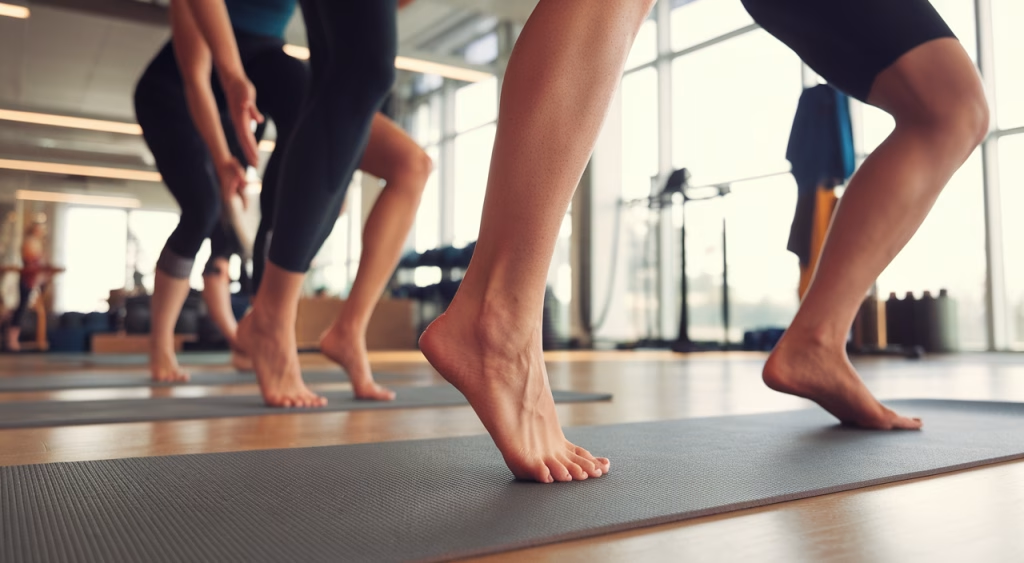
What Are the Best Ankle and Foot Exercises for Strength and Balance?
If you’re looking to improve ankle strength, enhance balance, and prevent injuries, the most effective exercises focus on mobility, flexibility, and controlled resistance. Research-backed ankle and foot exercises like calf raises, resisted plantarflexion, and balance drills provide foundational support for daily movement, sports performance, and injury recovery.
TL;DR – Summary of Effective Ankle and Foot Exercises
- Enhanced Ankle Strength: Calf raises and resistance band work strengthen key stabilizing muscles for better support.
- Superior Balance: Single-leg stances and dynamic drills boost proprioception and neurological control.
- Injury Prevention: Regular ankle exercise routines reduce sprain risk by up to 40% and support safer mobility.
- Improved Flexibility: Targeted stretching routines address tight tendons and muscles around the ankle joint.
- Universal Application: Proven effective for seniors, athletes, and those recovering from ankle injuries.
Introduction to Ankle and Foot Exercises
Your feet and ankles are the foundation of every movement you make. Each stride, jump, and pivot relies on them to be strong, stable, and flexible. Yet many people neglect ankle and foot care until an injury forces attention. This oversight is particularly common among athletes pushing their limits, seniors working to maintain mobility, and individuals recovering from sprains or fractures.
When your ankle and foot muscles are properly conditioned, you’ll notice immediate improvements—greater walking confidence, faster reactions, and significantly reduced risk of balance-related injuries.
In physical therapy, we focus on prevention as much as treatment. This comprehensive guide provides you with evidence-based ankle and foot exercises that build balance, ankle strength, flexibility, and plantarflexion strength to keep you moving safely and confidently.
Benefits of Strengthening Ankle Muscles
Have you ever stepped off a curb and felt your ankle give way? That wobble signals weakness in your ankle’s stabilizing muscles. Strengthening these muscles delivers measurable benefits—whether you’re sprinting around bases, navigating uneven sidewalks with your dog, or managing arthritis-related joint instability.
Why Prioritize Ankle Strength?
- Dramatically Reduces Injury Risk: Strong ankle muscles protect ligaments from dangerous overstretching or tearing.
- Boosts Athletic Performance: Enhanced ankle strength enables quicker directional changes and more explosive power.
- Improves Daily Balance: Particularly crucial for older adults, ankle strength supports stable posture and fall prevention.
- Accelerates Recovery: Structured ankle exercises restore stability post-injury while preventing future setbacks.
Top 10 Ankle and Foot Exercises for Maximum Strength and Balance
These evidence-based exercises target mobility, strength, and balance simultaneously. You can perform most of them at home with minimal equipment.
1. Standing Calf Raises
Primary Target: Gastrocnemius and soleus (calf muscles)
How to Perform: Stand tall near a wall or chair for support. Rise onto your toes, hold for 2–3 seconds, then slowly lower with control. Complete 3 sets of 12–15 reps.
2. Resistance Band Plantarflexion
Primary Target: Plantarflexion strength and ankle mobility
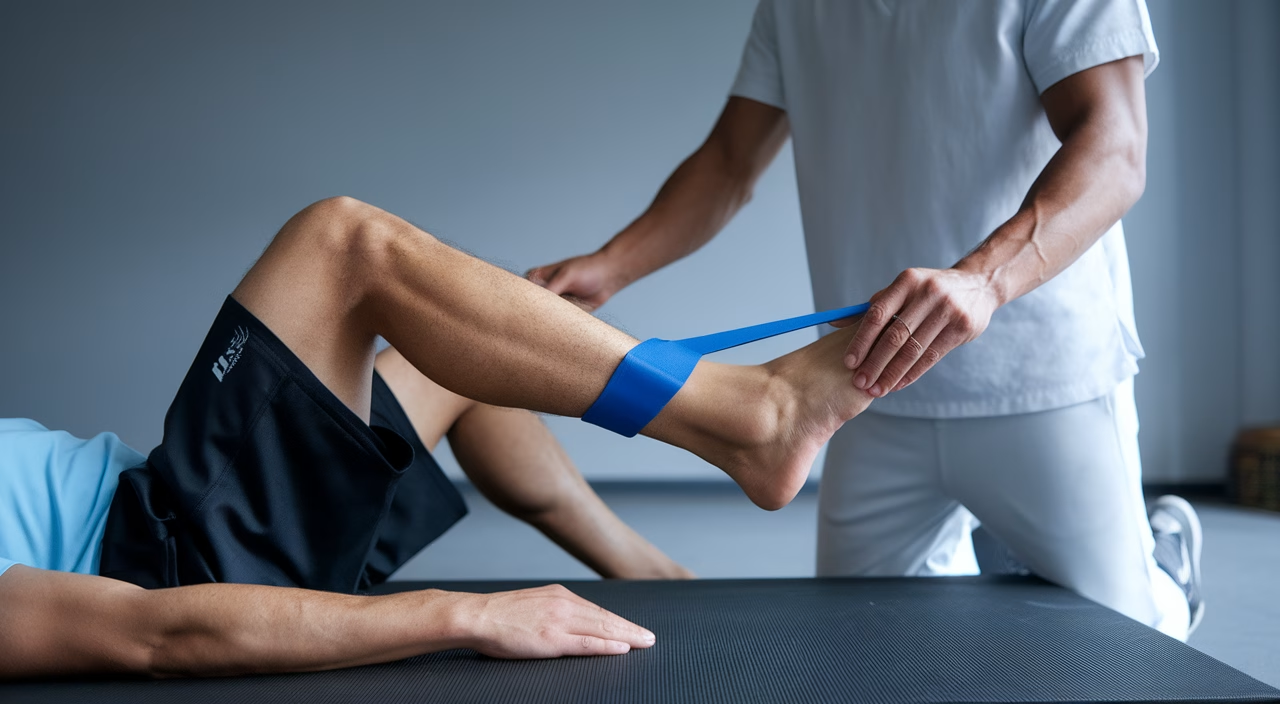
How to Perform: Sit on the floor with legs extended. Wrap a resistance band around the ball of one foot. Point your toes forward against resistance, then return slowly. Complete 2–3 sets of 12 reps per foot.
3. Ankle Alphabet
Primary Target: Range of motion and neuromuscular control
How to Perform: While seated or lying down, use your big toe to “draw” the alphabet in the air. This improves flexibility and ankle strength simultaneously. Complete once per foot.
4. Single-Leg Balance Challenge
Primary Target: Balance and proprioception
How to Perform: Stand on one leg for 30 seconds. Progress difficulty by closing your eyes or standing on an unstable surface like a pillow. Repeat 2–3 times each side.
5. Toe Curls with Towel
Primary Target: Intrinsic foot muscles and arch strength
How to Perform: Place a towel on the floor and curl it toward you using only your toes. This simple exercise builds crucial foot stability. Do 2–3 sets of 10 reps per foot.
6. Heel Walks
Primary Target: Tibialis anterior (shin muscles)
How to Perform: Walk forward on your heels only, keeping toes lifted high. Continue for 20–30 seconds. Rest and repeat 2 more times.
7. Lateral Hops (Advanced)
Primary Target: Dynamic ankle strength and athletic agility
How to Perform: Hop side to side over a line using one foot, maintaining control for 10–15 seconds each leg. Focus on soft, controlled landings to maximize ankle strength gains.
8. Towel Calf Stretch (For Flexibility)
Primary Target: Calf and posterior tibialis flexibility
How to Perform: Sit with legs extended, loop a towel around your foot and pull gently toward you. Hold 30 seconds, repeat 3 times per foot for optimal flexibility gains.
9. Foot Doming
Primary Target: Arch control and foot stability
How to Perform: Stand flat-footed and “shorten” your foot by lifting your arch without curling your toes. Hold 5 seconds. Complete 2 sets of 10 reps.
10. Heel Drop on Step
Primary Target: Eccentric calf strength and ankle mobility
How to Perform: Stand on a step with heels hanging off the edge. Slowly lower your heels below step level, then raise back up. Perform 10–12 reps across 3 sets.
Recovery and Injury Prevention through Exercise
In rehabilitation and physical therapy settings, structured ankle and foot exercises are essential for accelerating recovery while preventing future setbacks. When you’re recovering from an ankle sprain, we implement progressive challenges to ensure long-term joint integrity—starting with gentle isometric strength work, then building toward dynamic movements like hops and agility drills.

How to Adjust Your Routine for Recovery
Start slowly and prioritize control over intensity. After injury, we focus on restoring full range of motion and building light resistance before progressing to plyometrics or high-speed activities. Listen to your body and progress gradually.
Preventing Future Ankle Injuries
Here’s what commonly happens—people rehab one ankle injury, stop their exercise routine, and suffer reinjury months later. That’s why ongoing maintenance through regular ankle and foot exercises is crucial. Include balance training, strengthen your peroneal muscles, and develop awareness of uneven surfaces.
Real-Life Success Stories from Individuals
Case Study: Daniel, 32 – Trail Runner, Post-Sprain Recovery
Daniel suffered a severe ankle sprain during a mountain run. Through our structured ankle strengthening program focusing on balance and plantarflexion strength, he regained full stability, avoided surgery, and returned to trail running stronger than before his injury.
Case Study: Elise, 68 – Senior Seeking Stability
After experiencing two concerning near-falls, Elise began daily toe curls and heel raises from our ankle exercise program. Within 6 weeks, her balance assessment scores improved by 40%, and her confidence when walking outdoors returned completely.
Case Study: Michael, 25 – Soccer Player Post-ACL Tear
While rehabbing his knee injury, Michael’s therapist incorporated foot doming and ankle resistance exercises. This comprehensive approach minimized knee strain and dramatically improved his overall lower limb coordination during cutting drills.
Cost Guide: Ankle and Foot Exercise Tools
| Equipment | Low-End | Mid-Range | High-End |
|---|---|---|---|
| Resistance Bands | $5 | $10–15 | $20+ |
| Ankle Weights | $10 | $20–30 | $50+ |
| Balance Pad | $15 | $25–40 | $60+ |
| Wobble Board | $20 | $40 | $70+ |
Final Thoughts
Strong, stable ankles and feet form the foundation of every movement you make—easy to overlook until problems arise, but impossible to ignore once they do. Regardless of your age, sport, or injury history, incorporating regular ankle and foot exercises into your routine keeps your body balanced, aligned, and resilient against future setbacks.
The best part? You don’t need expensive gym equipment or specialist tools—most of these ankle strengthening movements can be performed barefoot in your living room. Build your routine gradually, listen to your body’s signals, and experience the confidence that comes with stronger, more stable feet and ankles.
Frequently Asked Questions
- Does ankle mobility affect balance?
Absolutely. Limited ankle mobility restricts your range of motion, leading to balance issues and altered walking patterns that worsen over time. - How often should I do ankle and foot exercises?
For general maintenance and injury prevention, aim for 2–3 times per week. If you’re recovering from injury or addressing specific imbalances, daily practice often yields better results. - What are signs I need to strengthen my ankles?
Watch for frequent ankle rolling, discomfort during movement, poor balance during single-leg activities, and ankle fatigue during walking or sports. - Can these help plantar fasciitis?
Yes, particularly foot doming and toe curls that strengthen your arch muscles, reducing harmful tension on the plantar fascia. - Are these exercises safe for seniors?
Absolutely. Start with seated or supported exercises like towel curls and wall-supported calf raises, then progress to standing balance challenges as your ankle strength improves. - Do I need equipment?
Most effective ankle and foot exercises use only your body weight. Resistance bands and balance pads are affordable options to increase challenge as you progress. - How long does it take to see results?
Many people notice improved control and ankle strength within 2–4 weeks of consistent training, with significant balance improvements often visible even sooner.