
Is Stretching Enough to Improve Flexibility?
In short—no, stretching alone isn’t enough when it comes to true flexibility improvement. While traditional stretching is a useful tool, it only scratches the surface. To truly unlock greater freedom of movement, you need a blend of mobility exercises, strength training through full range of motion, and consistent attention to your body’s movement patterns.
TL;DR – What You Need to Know:
- Stretching only influences passive flexibility—not how you move under load or in real-life activities.
- Mobility training involves active control of movement and targets joint health and muscle activation.
- Flexibility improvement requires integrating dynamic mobility, tissue prep, and strength through motion.
- Common mistakes: holding static stretches too long, skipping active mobilization, not training end ranges.
- Smart integration: 10–15 minute mobility sessions before/after workouts lead to sustainable flexibility gains.
Introduction: The Importance of Flexibility
Think of your body like a well-tuned orchestra. Each system—your muscles, joints, and nervous system—plays a note, and flexibility is the harmony that binds them. Without it, movements become stiff, inefficient, and even painful. Most fitness enthusiasts and athletes accept tightness as a byproduct of training. But what if you could achieve flexibility improvement without aching hamstrings or hip tightness being the norm?
Flexibility affects nearly every aspect of your daily life. From lifting overhead to simply kneeling to tie your shoe—pain-free movement relies on your tissue’s ability to glide, bend, and support you through space. That’s where we dig deeper—and where stretching is just the beginning of true flexibility training.
Understanding Flexibility vs. Mobility
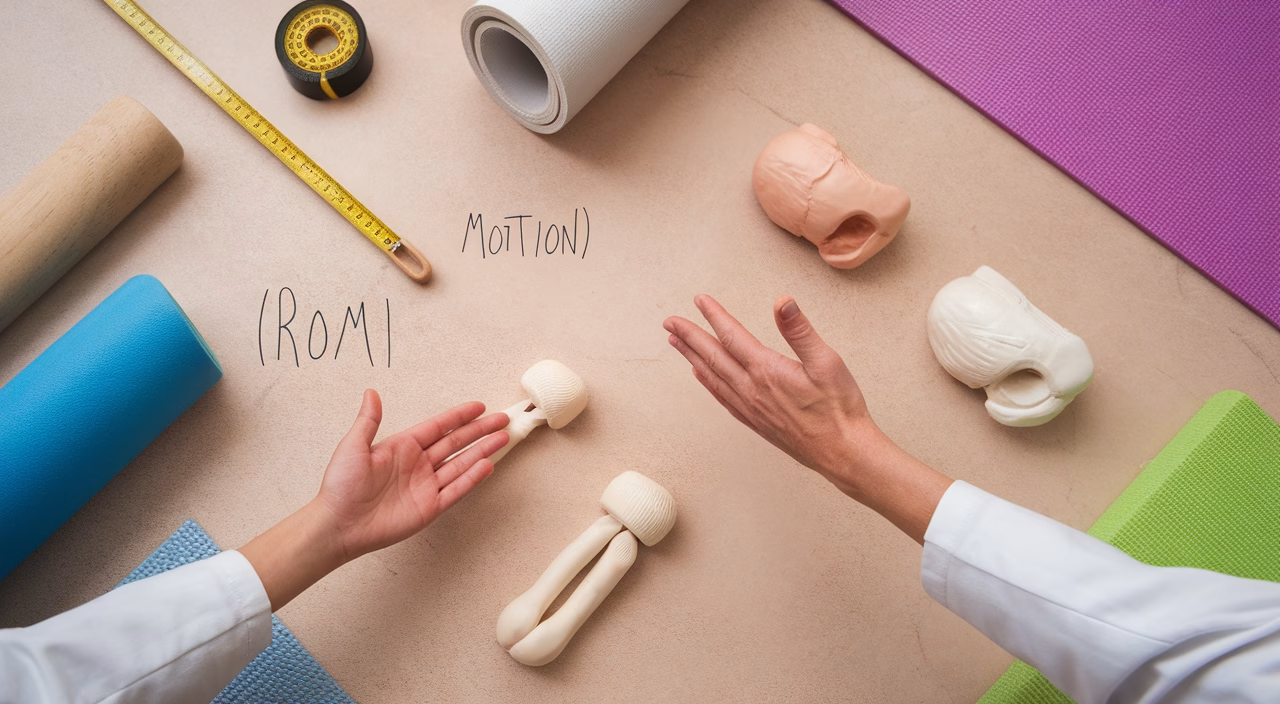
Let’s get clear on the terms we often use interchangeably—but shouldn’t. Flexibility refers to your muscles’ ability to lengthen passively. Think about stretching your hamstrings while lying down—that’s a flexibility drill.
Mobility, on the other hand, is about active control. It describes your ability to move a joint through its full range of motion with stability and strength. That’s different from simply pulling a muscle into a longer position—mobility exercises demand muscular engagement and promote better joint health.
| Flexibility | Mobility | |
|---|---|---|
| Definition | Passive range of motion | Active movement through range |
| Controlled by | Muscle length & nervous system | Joint function & neuromuscular control |
| Training approach | Static or dynamic stretching | Active mobility drills, resistance-based movement |
If your shoulder is flexible but lacks mobility, you may reach overhead with ease during a test but struggle in a loaded overhead press. That disconnect makes injuries more likely. True flexibility improvement combines passive gains with active movement control for lasting pain-free movement.
Common Mistakes in Flexibility Training
Here’s where I see many fitness clients—and even athletes—go wrong when chasing flexibility improvement:
- Over-relying on static stretching: Holding a stretch for 60 seconds without activating surrounding tissue can lead to instability or even stiffness afterward.
- Forgetting the nervous system: Flexibility training isn’t just structural—your brain limits range to keep you safe. Skipping breathwork or activation can mean spinning your wheels.
- Ignoring strength at end ranges: You need to train muscles under length and load to cement safe, usable flexibility through proper mobility exercises.
- Infrequent or inconsistent work: Stretching once or twice a week isn’t enough for flexibility improvement. Your body responds to daily input like brushing your teeth.
Bottom line? You can stretch for years and still not achieve pain-free movement if you’re missing these key pieces of effective flexibility training.
Effective Strategies for Improving Flexibility and Mobility
Now we’re talking solutions. Here’s what works for real flexibility improvement—and how to start applying these mobility exercises today.
1. Focus on Active Mobility Drills
Controlled Articular Rotations (CARs) are one of the best mobility exercises for developing joint health. They help you isolate and control your end range without compensation.
2. Use Strength Training Through Full ROM
Movements like deep goblet squats, deficit pushups, and Nordic hamstring curls force muscles to strengthen while lengthened. This makes your flexibility training gains “stick” and supports better joint health.
3. Breathe to Create Space
Adding diaphragmatic breathwork to your mobility work calms the nervous system and promotes tissue lengthening. It’s simple but incredibly effective for flexibility improvement.
4. Prioritize Warm Tissue
Stretching cold tissues is inefficient and risky. Start with light cardio or foam rolling to improve circulation, then mobilize and stretch for optimal flexibility training results.
Cost Guide: Investing in Flexibility & Mobility Tools
| Tool / Service | Low-End | Mid-Range | High-End |
|---|---|---|---|
| Foam Roller | $10 | $30 | $80+ |
| Resistance Bands | $8 | $25 | $60+ |
| Online Mobility Programs | Free | $20/month | $100+/month |
| 1-on-1 Coaching | $50/session | $80/session | $150+/session |
Incorporating Mobility Work into Your Routine
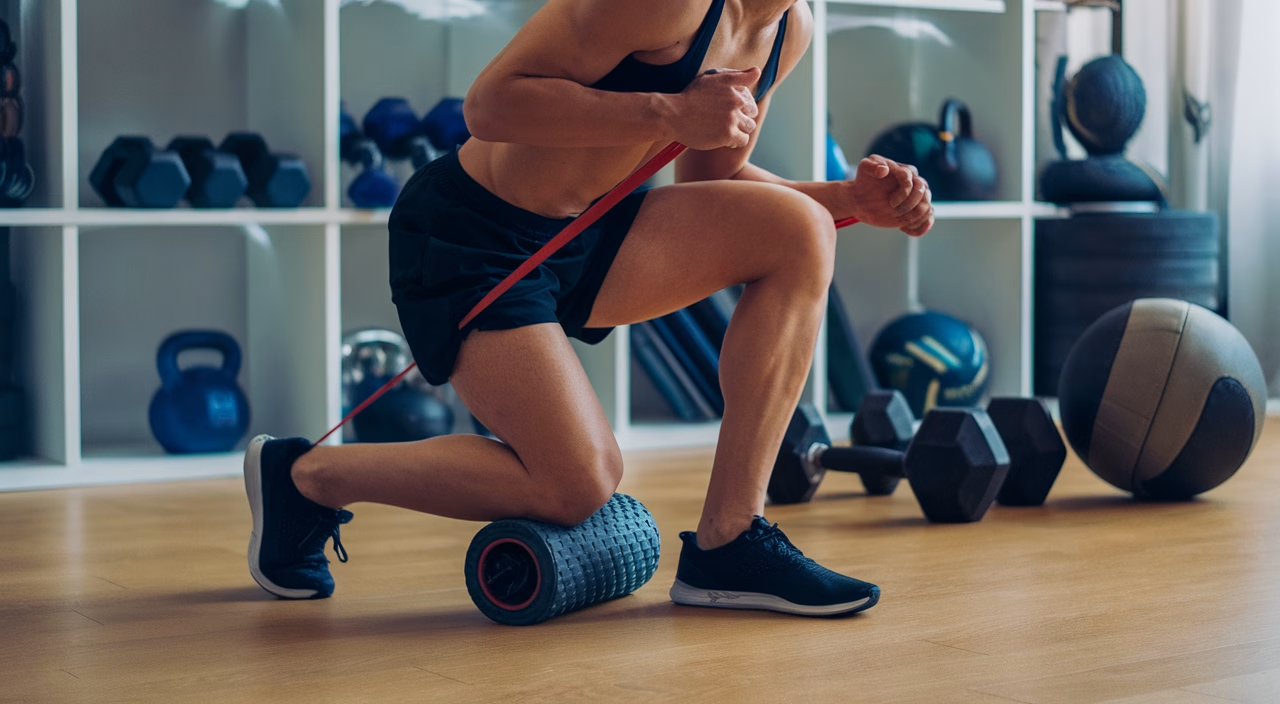
So, how do you mesh everything together for consistent flexibility improvement? Here’s an example framework:
- Before workouts:
- 5 minutes joint-specific CARs (hips, shoulders or spine)
- 5 minutes dynamic mobility exercises (leg swings, arm circles)
- After workouts:
- 5–10 minutes active stretch + breathwork for flexibility training
- 30-second static holds for tight spots
- Rest days:
- 15 minutes full-body flow yoga or dynamic mobility work
The key is sustainability. Think of mobility and flexibility training as performance hygiene—not punishment. Just like brushing your teeth, small daily inputs compound into real transformation and lasting joint health.
Conclusion: Achieving Lasting Flexibility Gains
Flexibility improvement doesn’t come from going longer in splits or adding another yoga class alone. The real magic lies in smart, consistent mobility training, understanding your nervous system’s limitations, and honoring both strength and stretch through proven mobility exercises.
When we combine flexibility and mobility in a meaningful way, we create a body that not only moves well—but resists injury and performs at its peak. And most importantly, we achieve true pain-free movement in our day-to-day lives. Stiffness? That’s optional when you master proper flexibility training.
Frequently Asked Questions
- Do you lose flexibility if you don’t stretch?
Yes. Without regular movement through full range and stretching or mobility work, tissues can stiffen, reducing flexibility and joint health over time. - Is it better to stretch before or after a workout?
Dynamic stretching or mobility exercises work best before a workout. Save static stretching for post-workout or evening sessions when tissues are warm. - How often should I train mobility?
Ideally, 5–6 days a week—even if briefly. Just 10–15 minutes of mobility exercises a day compounds into noticeable flexibility improvement over time. - What’s the difference between dynamic and static stretching?
Dynamic stretches involve movement and are best pre-workout, while static stretches are held poses used post-training or in specific flexibility training programs. - Can I be strong but not mobile?
Absolutely. Strength doesn’t always equal range of motion. Many people build muscle in shortened ranges and neglect mobility—leading to stiffness or dysfunction that impacts joint health. - Why do I feel tighter the day after stretching?
This may be rebound tension. Without proper warm-up or breathing, your nervous system tightens muscles after unfamiliar stretches. Consistent mobility exercises work better long-term for flexibility improvement. - What are signs my mobility is improving?
Less pain during or after training, smoother coordination, deeper squats with ease, and improved posture are all positive signs that your mobility training and flexibility improvement efforts are paying off with better pain-free movement.