
How Can Adjusting Your Toe-Out Angle Improve Gait Mechanics?
Correcting your toe-out angle can minimize joint stress, foster better alignment, and improve how efficiently and comfortably you walk. Simple adjustments to foot positioning, combined with the right exercises and footwear, can significantly improve your overall mobility and reduce pain.
TL;DR:
- Toe-out angle refers to how far your feet angle outwards when walking.
- Incorrect angles can increase the adduction moment—stress on joint structures like the knee, hip, and ankles.
- Modifying your toe alignment boosts gait mechanics and reduces injury risk.
- Signs of misalignment include knee pain, foot fatigue, and reduced balance.
- Effective strategies include stretching, strengthening, and wearing supportive footwear.
1. Understanding Toe-Out Angle in Gait Mechanics
1.1 What is Toe-Out Angle?
Your natural walking pattern is like a finely tuned machine, and the toe-out angle is one of the most overlooked yet impactful mechanical elements. It refers to the angle formed between the direction your foot points and the direction you’re walking in. When you see footprints in sand with toes pointing outward rather than straight ahead—that’s your toe-out angle at work.
A small toe-out angle is normal and varies from person to person. But too much of it—or asymmetry between feet—can create a ripple effect throughout your entire gait cycle, affecting your gait mechanics and overall mobility.
2. Impact of Toe-Out Angle on Gait Mechanics
2.1 Reduction of Adduction Moment
The adduction moment is the torque or rotational force placed on your joints—especially the knees—during movement. A misaligned toe-out angle can cause your knees to collapse inward or compensate in other dysfunctional ways, directly impacting your gait mechanics.
When you reduce an exaggerated toe-out angle, you often achieve a measurable reduction in the adduction moment. This means less stress on your ligaments, less joint pain, and even a lower risk of long-term conditions like osteoarthritis.
2.2 Shifting Ground Reaction Force Vector
The way your foot meets the ground during walking directly affects the ground reaction force. Every time your foot strikes, it pushes into the floor—and the floor pushes back. If your toe-out angle is too pronounced, that counterforce shifts in a direction your joints aren’t designed to handle, particularly straining your knees and hips.
The goal is to align your body so that this ground reaction force travels efficiently through your kinetic chain, optimizing your gait mechanics for better performance and reduced pain.
3. Signs and Symptoms of Misaligned Toe-Out Angle
Misaligned toe-out angles often fly under the radar—until something starts to hurt. Here are the most common warning signs that your gait mechanics need attention:
- Frequent knee or foot pain after walking or standing
- Uneven wear patterns on the soles of your shoes
- Hip discomfort, especially after physical activity
- Reduced range of motion or flexibility in your ankles and calves
- Visible outward-pointing toes during walking or standing
We often see individuals whose symptoms begin subtly—perhaps stiffness in the knees—but progress as compensation patterns worsen. Early assessment and correction of your toe-out angle can prevent chronic mobility challenges down the road.
4. Correcting Toe-Out Angle for Improved Mobility
4.1 Exercises and Techniques to Adjust Toe-Out Angle
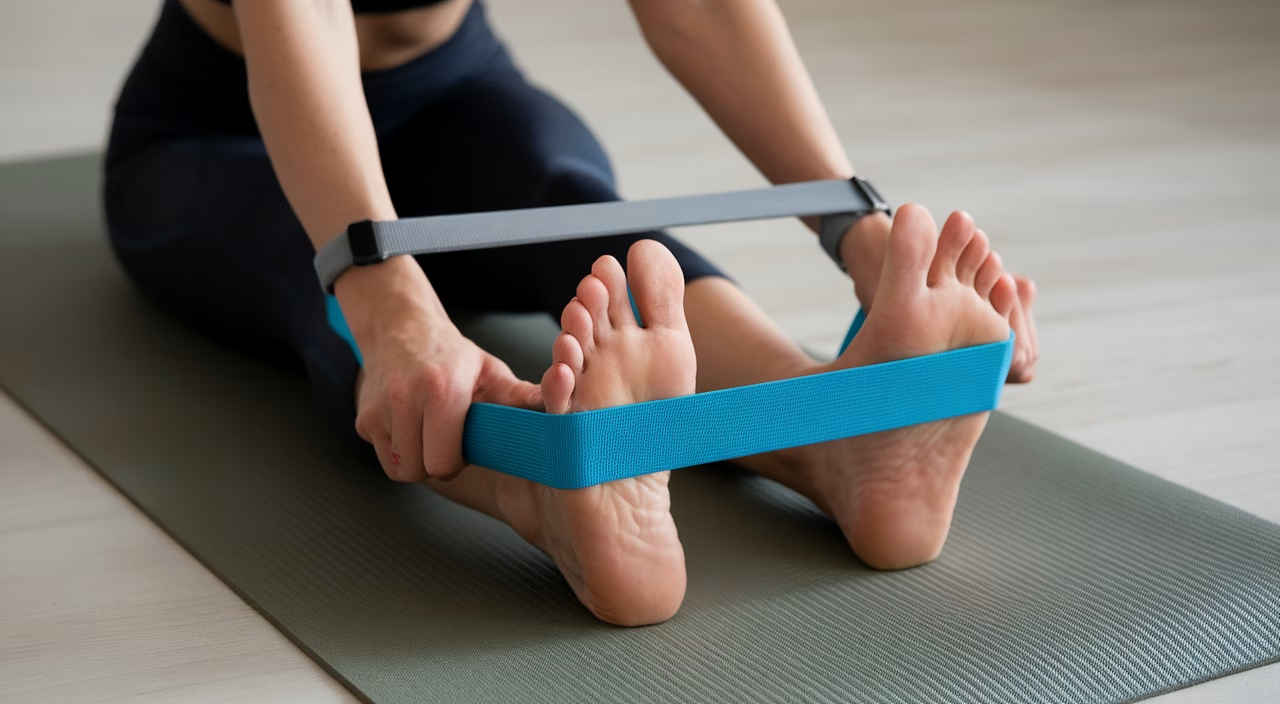
Correcting your toe-out angle isn’t about forcing your foot straight—it’s about training your body’s gait mechanics to naturally realign over time. Here are proven techniques and exercises to improve your mobility:
- Wall Sit with Foot Alignment: Place your heels close to the wall and aim your toes forward. Hold for 30–60 seconds to reinforce neutral foot alignment and improve gait mechanics.
- Calf Stretch Against Wall: Tight calf muscles can contribute to excessive toe-out angle. Keep toes aligned with the wall as you gently press the heel down.
- Glute Bridges: Strong glutes help stabilize leg rotation and support proper gait mechanics. Use a resistance band around knees to improve hip control.
- Foot Arches Activation: Practice lifting the inner arch of the foot without curling your toes. This builds strength in the intrinsic foot muscles that support alignment and mobility.
4.2 Importance of Proper Footwear
The footwear you choose either supports your gait mechanics—or sabotages them. Think of proper footwear as a steering wheel for your walking pattern. Choose shoes with:
- Good medial support to prevent overpronation and maintain proper toe-out angle
- Neutral heel drop that promotes even weight distribution and better ground reaction force management
- A wide toe box to allow natural toe splay and support healthy gait mechanics
If you’re working to correct your toe-out angle, avoid minimalist shoes or overly cushioned models unless you’ve received individualized advice. Stability and structure in your footwear are your best allies for improving mobility and gait mechanics.
Cost Guide: Toe-Out Correction Options
| Correction Method | Low-End | Mid-Range | High-End |
|---|---|---|---|
| Physical Therapy Sessions | $40/session | $75/session | $120/session |
| Corrective Footwear | $60/pair | $100/pair | $180/pair |
| Custom Orthotics | $100 | $300 | $600+ |
5. Conclusion: Enhancing Your Gait Mechanics
Walking is one of the most natural things we do, but when gait mechanics go awry, it becomes a silent saboteur of your mobility. Optimizing your toe-out angle is one powerful lever that can realign your entire walking pattern, giving you less pain, better performance, and more joy in every step.
Remember: small changes to your toe-out angle and gait mechanics lead to big rewards—but only with consistency. Start with an honest assessment, integrate simple exercises into your daily routine, and choose your footwear wisely. Your future self—and your joints—will thank you for taking action to improve your mobility today.
Frequently Asked Questions
- What are the symptoms of a toe-out alignment?
Common signs include knee pain, uneven wear on shoes, hip discomfort, and visibly outward-pointing toes during walking. - Can exercises fix my toe-out gait completely?
For many people, consistent corrective exercises and guidance from a professional can significantly improve or normalize toe alignment. - Is a small toe-out angle normal?
Yes, a slight outward angle is natural for most people and part of a healthy walking pattern. - How do I know if my shoes are affecting my gait?
If you notice foot fatigue, instability, or irregular wear patterns on the soles, your footwear may be contributing to alignment issues. - Do orthotics help align the toe-out angle?
Yes, custom orthotics can support neutral foot positioning, especially when combined with strengthening exercises. - Should I see a physical therapist for this?
Absolutely. A professional can assess your gait and design a specific plan that fits your needs and goals. - How long does it take to correct toe-out angle?
Changes may begin within weeks, but full correction can take months of consistent effort.