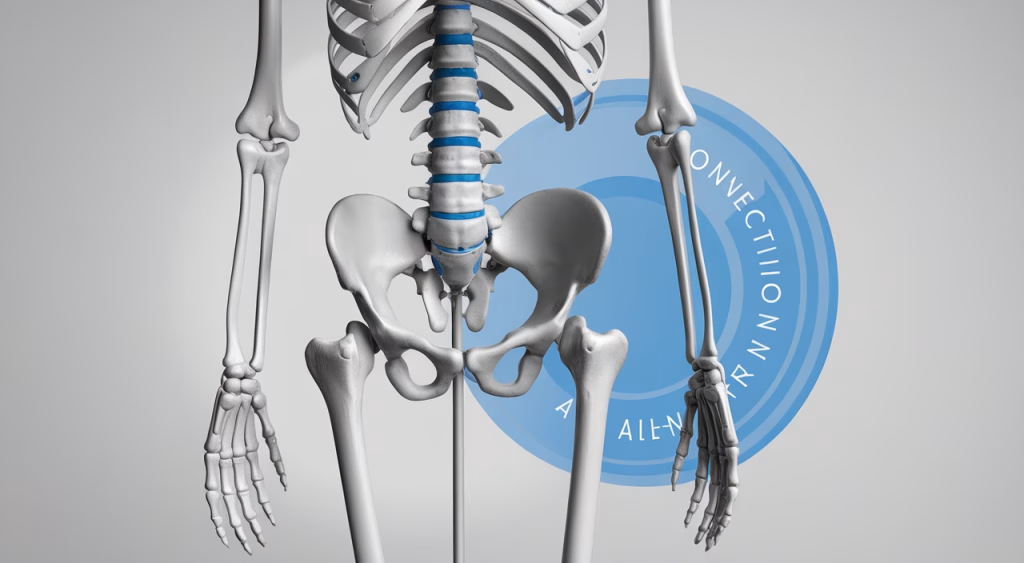
What’s the link between hip and foot pain?
Short answer: The hip and foot pain connection lies in your body’s biomechanical chain. When your hip alignment is off, it changes how your feet strike the ground, causing pain. Similarly, poor foot posture forces your hips to overcompensate, creating a cycle of discomfort that affects your entire lower body.
TL;DR: Understanding Hip and Foot Pain Connection
- Interconnected System: Your hips, knees, and feet form a kinetic chain—misalignment in one affects the others.
- Foot Posture Matters: Flat feet or high arches often result in overcompensation by the hips and spine.
- Hip Misalignment Effects: When hips tilt or rotate abnormally, it changes how your foot strikes the ground, leading to pain.
- Common Symptoms: Heel pain, knee discomfort, pelvic imbalance, lower back tightness—all may stem from the same root.
- Effective Treatments: Includes physical therapy, corrective exercises, orthotics, and improved footwear.
Understanding the Hip and Foot Pain Connection
Think of your body as an architectural structure, like a suspension bridge. Every beam supports another, and just one misaligned anchor throws off the entire build. Your musculoskeletal system works the same way. When foot alignment is compromised, it impacts the structure above—knees, hips, and even your back—causing pain that seems to come from nowhere.
The hip and foot pain connection isn’t just anecdotal—it’s deeply rooted in biomechanics. This relationship is often ignored until pain escalates or spreads throughout your lower body. To understand this better, let’s explore how your feet and hips communicate, compensate, and sometimes collapse under pressure.
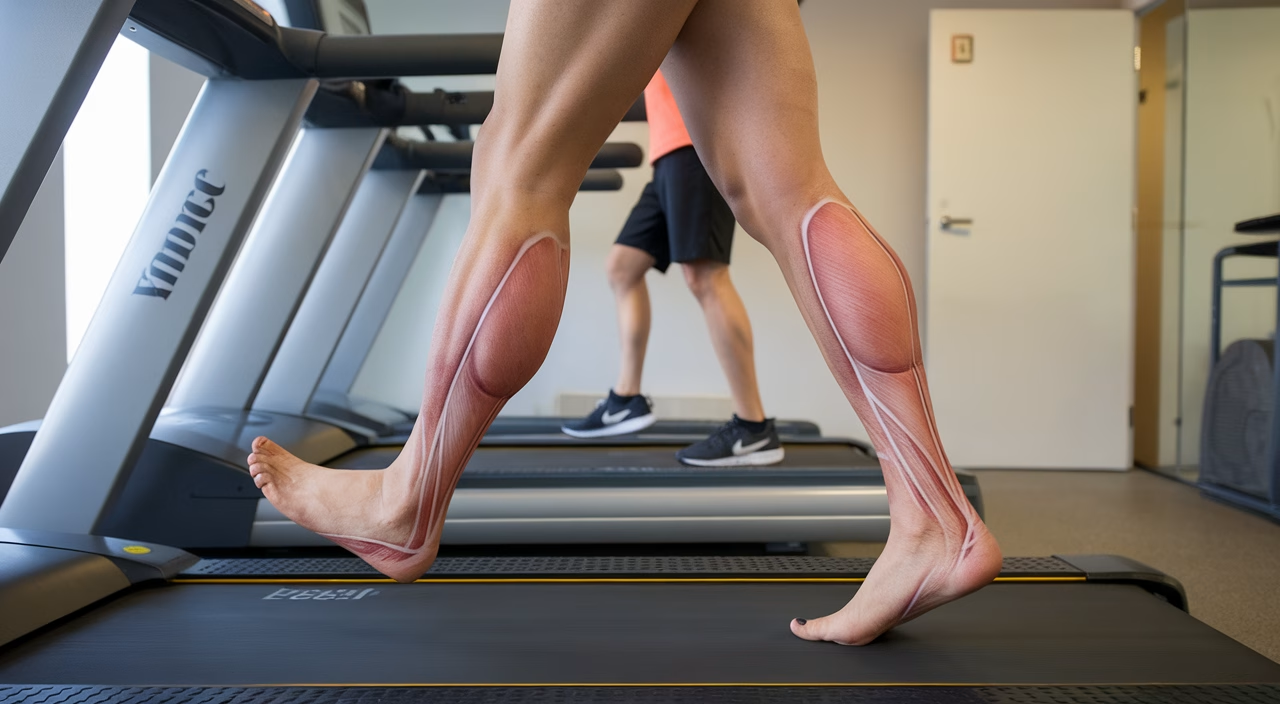
How Your Feet Affect Your Knees, Hips, and Lower Back
Your feet are literally your foundation. When that foundation is faulty—say, due to flat arches or pronation—it changes how your entire body bears weight. The ripple effect? Joint stress, muscular imbalances, and eventual pain higher up the chain, creating a clear hip and foot pain connection.
The Foot Posture-Hip Chain Reaction
- Flat Feet: Cause inward rotation of the tibia, leading to inward knee collapse, followed by pelvic tilt.
- Overpronation: Doesn’t just damage your stride—it destabilizes hips and stresses the lower back.
- High Arches: Reduce shock absorption, transferring force upward to your hips.
For example, someone with a collapsed arch might begin walking with a subtle limp. Over time, this minor change throws pelvic alignment off, tightening one hip and weakening the other. Soon enough, foot pain becomes hip pain, demonstrating the powerful impact of hip misalignment on feet.
The Influence of Hip Issues on Foot Pain
If your hips are the drivers of movement, your feet are the wheels—they go where they’re told. So, when hips misfire, your feet absorb the consequences in multiple ways. Hip misalignment changes the angles at which your leg bones interact with your feet during motion, making each step potentially harmful over time.
Common Foot Symptoms Stemming From Hip Issues
- Heel pain due to hip misalignment throwing off gait patterns
- Bunions triggered by excessive inward rotation caused by weak hip stabilizers
- Plantar fasciitis linked to overcompensation of foot muscles struggling to absorb shock
This scenario often plays out with individuals who sit for long hours. Sitting shortens hip flexors, causes anterior pelvic tilt, and forces an unnatural stride. Over weeks or months, heel spurs or arch strain develop—not as isolated foot problems, but symptoms of the systemic hip and foot pain connection.
Common Causes and Symptoms of Hip and Foot Pain
Pain is rarely isolated when it comes to the hip and foot pain connection. Here are some underlying issues that typically drive dual pain between hips and feet:
| Cause | Hip Symptoms | Foot Symptoms |
|---|---|---|
| Flat Feet | Pelvic tilt, lower back stiffness | Arch pain, plantar fasciitis |
| Hip Misalignment | Sciatic irritation, leg length discrepancy | Heel pain, outward toe drift |
| Overpronation | IT band tightness, glute weakness | Knee and arch pain |
| Leg Length Differences | Hip elevation, spine curve | One-sided calluses or foot arch collapse |
These patterns often occur unbeknownst to the sufferer. For instance, you may wear out one shoe faster than the other, limp slightly during walks, or frequently shift weight from one leg—all clues pointing toward the hip and foot pain connection affecting your daily life.
Treatment Options for Alleviating Hip and Foot Pain
If you want real relief from your hip and foot pain connection issues, you have to address not just where it hurts, but why it hurts. Let’s break down treatment strategies that actually work for addressing both hip misalignment effects and foot alignment problems:
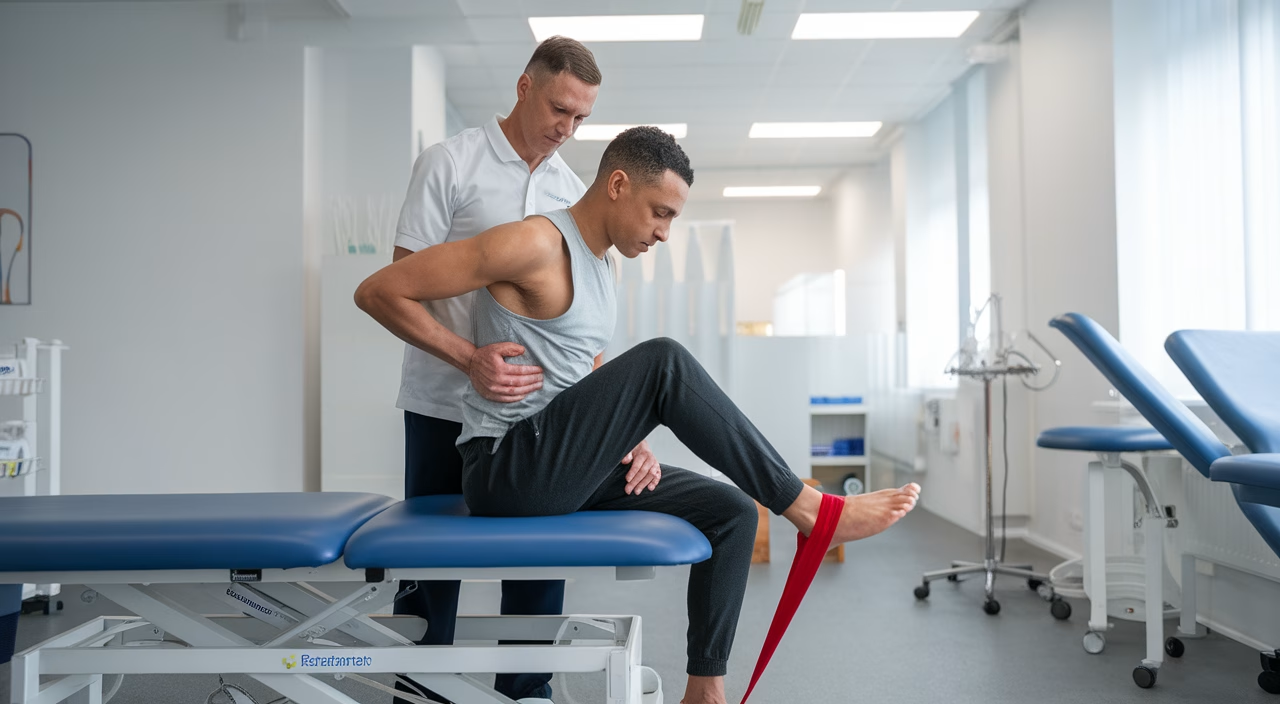
Effective Treatment for Hip and Foot Pain
- Physical Therapy: Tailored exercises targeting hip stabilizers and foot mechanics improve alignment and address the root causes.
- Orthotics: Custom shoe inserts can support arches and restore correct gait, breaking the cycle of compensation.
- Manual Adjustments: Chiropractic manipulations or osteopathic techniques can realign hips and spine.
- Stretching & Strengthening: Hip openers and glute activations are essential for lasting support and improved alignment.
- Massage & Myofascial Release: Relieve muscle knots perpetuating asymmetry in the kinetic chain.
Cost Guide for Common Treatment Options
| Treatment Type | Low Range | Mid Range | High Range |
|---|---|---|---|
| Physical Therapy (per visit) | $50 | $100 | $200 |
| Orthotic Inserts | $30 | $100 | $300+ |
| Chiropractic Care | $40 | $80 | $150 |
Pro-tip: Don’t ignore footwear when treating hip and foot pain. Inappropriate shoes can intensify both hip pain and pronation-related symptoms. Choose well-cushioned, arch-supporting, wide-toe box footwear if you suffer from both pain points.
Final Thought: Listen to the Pain Pattern
Hip and foot pain are rarely isolated—they represent a connected system crying out for balance. The hip and foot pain connection shows us that your body is trying to adapt, but adaptation without proper alignment eventually leads to chronic issues. By acknowledging this connection, focusing on posture, strengthening key muscles, and choosing the right therapy, lasting relief from both hip misalignment effects and foot-related problems is not only possible—it’s probable.
Frequently Asked Questions
- Can hip misalignment cause heel pain?
- Yes. When your hips tilt or rotate abnormally, they alter your walking pattern. This increase in uneven loading of the foot can strain the heels—leading to inflammatory conditions like plantar fasciitis, demonstrating the clear hip and foot pain connection.
- What footwear is best for combined hip and foot pain?
- Supportive shoes with appropriate arch support, cushioning, and a wide toe box help stabilize the chain from the ground up. Avoid high heels or excessively flat soles when dealing with hip and foot pain connection issues.
- Can flat feet cause hip pain?
- Absolutely. Flat feet often force the legs to rotate inward, misaligning the hips, which can eventually lead to discomfort in the lower back and pelvis. This is a perfect example of how foot alignment impacts the entire kinetic chain.
- Is surgery required to fix hip-foot alignment?
- In most cases, no. Conservative treatment for hip and foot pain like therapy and orthotics resolve symptoms. Surgery is typically a last resort when structural damage or degenerative disease exists.
- How quickly can I expect pain relief?
- With accurate assessment and consistent therapy targeting the hip and foot pain connection, relief may begin within weeks. However, complete correction may take several months if the imbalance is longstanding.
- Is leg length discrepancy a real concern?
- Yes. Even a small difference in leg length can cause compensatory hip angles and create stress points in feet. Proper evaluation can uncover and address this subtle contributor to hip and foot pain.
- Should I see a specialist for hip and foot pain?
- If your symptoms persist for more than 2-3 weeks or worsen during movement, it’s wise to consult a physical therapist or orthopedic specialist who understands the hip and foot pain connection for a comprehensive evaluation.