What are the best fascial release techniques to relieve restriction and pain?
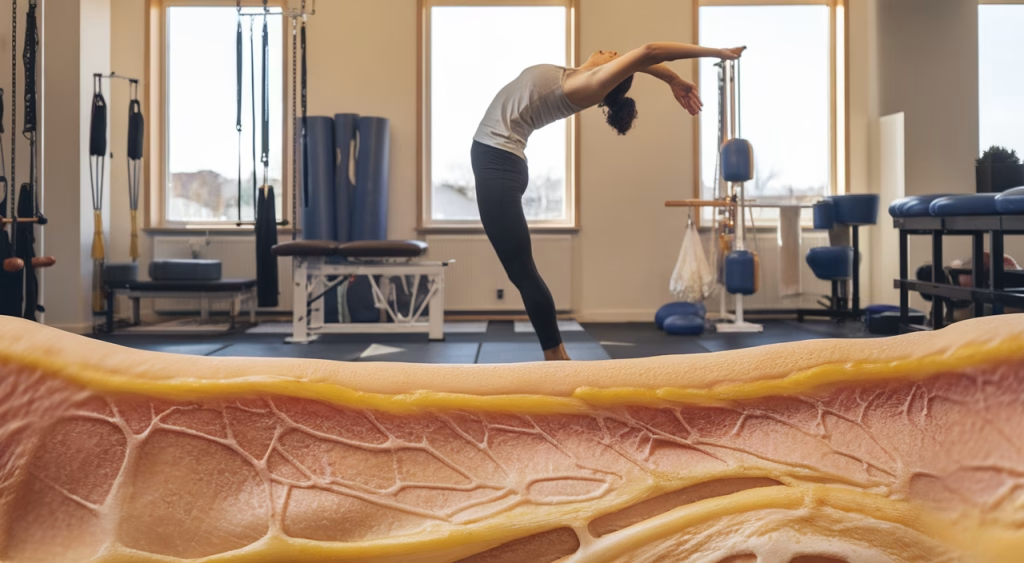
The most effective fascial release techniques combine targeted pressure, movement patterns, and consistent mobility work to restore fluidity to your fascia—the connective tissue that links every muscle and movement. These proven methods support pain-free, functional motion and help you regain natural movement patterns.
- Fascial release techniques restore pliability and hydration to stuck tissue.
- Corrective movement patterns rebuild healthy muscle function.
- Mind-body practices like breathwork reduce tension and aid recovery.
- Regular fascia care prevents fascial restriction and pain while supporting long-term mobility.
The Impact of Fascial Restriction on Movement
Understanding Fascia and Its Role in Muscle Function
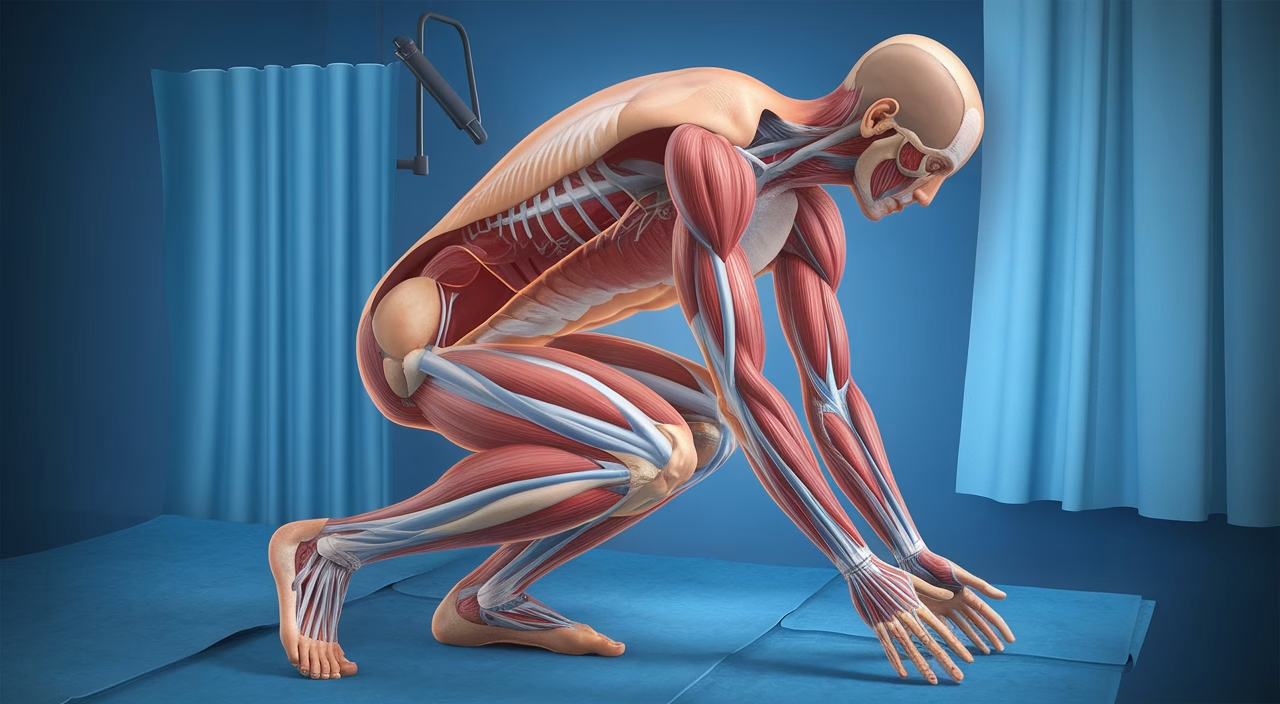
Fascia is your body’s intricate webbing—thin sheets of connective tissue that wrap around and penetrate muscles, bones, nerves, and organs. It holds you together, literally. Composed primarily of collagen and elastin, healthy fascia is elastic, well-hydrated, and responsive. But when fascial restriction develops, this web of tissue loses its slide and glide, causing stiffness, tension, and chronic pain.
Imagine pulling on a corner of a spider web. The whole structure reacts. That’s how fascial restriction in one area can ripple across your posture, muscle function, and even your ability to breathe efficiently.
Unrestricted fascia allows for full-body cooperation in movement, which means easier walking, pain-free lifting, and better posture without effort. When fascial restriction locks down your tissue, it resists movement patterns, forcing muscles to work harder, disrupting alignment, and triggering discomfort or chronic pain over time.
Recognizing Signs of Fascial Restriction
Common Symptoms and Effects on Movement
Fascial restriction doesn’t always announce itself with sharp pain—it often whispers through subtle, nagging discomfort and dysfunctional movement patterns long before the more obvious symptoms emerge.
- Unexpected stiffness after light activity
- Chronic tightness that stretching doesn’t relieve
- Loss of range of motion in joints
- Pain that changes location or seems diffuse
- Recurring muscle strains or unexplained tension
Many people assume these feelings are just aging or wear-and-tear—but often, unresolved fascial restriction and pain are at the root. If movement feels harder than it should be, your fascia might be involved.
7 Proven Fascial Release Techniques
Professional Methods and DIY Approaches
Effective fascial release techniques aim to “unclog” stuck tissue, restore glide between layers of fascia and muscle, and reestablish healthy movement patterns. Here are evidence-based methods used by bodyworkers, physical therapists, and movement specialists:
| Technique | How it Works | Best For |
|---|---|---|
| Myofascial Release | Applies gentle, sustained pressure to fascial areas | General stiffness, injury recovery |
| Dynamic Stretching | Elongates fascia in motion-rich patterns | Pre-workout mobility, long-term maintenance |
| Fascial Ball Rolling | Targets trigger points and adhesions with tools | Localized areas of tightness |
| Cupping Therapy | Uses suction to lift tissues and improve slide | Detox, fascial dehydration |
| Breath-Centered Movement | Syncs breath with motion to mobilize fascia | Chronic pain, nervous system regulation |
When you practice these fascial release techniques consistently over time, they don’t just ease restriction—they re-educate your entire movement system and improve muscle function. That’s the real secret of long-lasting pain relief.
Integrating Movement Patterns with Fascial Health
Improving Mobility and Muscle Function

The way you move trains your fascia every day. Whether it improves or restricts your movement depends on the quality and variety of your movement patterns.
When working with clients recovering from fascial restriction and pain, I often start with simple movement resets. These are composed of functional movement patterns—like crawling, lunging, and reaching—done slowly and with intention. The goal isn’t just movement, but awareness of how fascia supports or resists that motion.
Top 5 Exercises to Boost Fascial Mobility
- Cat-Cow Spinal Flow – opens up the deep front fascial line and improves muscle function
- Lunge-to-Twist – reactivates rotational mobility in the hips and spine
- Wall Slide Reaches – retrains shoulder-line fascia for free upward movement
- Deep Squats with Arm Reach – strengthens the posterior chain and fascial continuity
- Diagonal Arm-Leg Glides – encourages cross-pattern activation for full-body harmony
Don’t rush these exercises. Slower equals smarter when restoring fascial resilience and improving movement patterns. Always pair motion with steady breathing to help recalibrate your nervous system’s connection to your fascia.
Real-Life Applications and Success Stories
Personal Experiences and Results with Fascial Release
I’ve worked with hundreds of people dealing with unexplained aches, movement blocks, and chronic pain—all of which often trace back to neglected fascial restriction.
One client, a weekend cyclist, came in frustrated by recurring hip tightness and hamstring issues. Despite stretching daily, he saw no progress. By addressing fascial restriction with ball release, dynamic spiraling motions, and deep breathing, he regained full range of motion within weeks. What made the difference? Respecting the fascia’s role in both structure and sensation while improving his movement patterns.
Another case involved a woman with long-term low back pain. Imaging showed nothing abnormal. But after a few weeks of fascial release techniques along the posterior chain (especially around her calves, hips, and lats), she experienced a dramatic reduction in daily pain and improved muscle function throughout her entire body.
Cost Guide for Fascial Therapy Options
| Service Type | Low-End ($) | Mid-Range ($) | High-End ($) |
|---|---|---|---|
| Self-Myofascial Tools | 10 | 25 | 50 |
| Group Movement Classes | 15/session | 30/session | 50/session |
| 1-on-1 Manual Therapy | 75 | 120 | 200+ |
| Holistic Fascial Programs | Free | 150 | 500+ |
Investing in fascial health isn’t just about eliminating pain—it’s about rewriting the way your body moves, feels, and functions long term through improved movement patterns and muscle function.
Frequently Asked Questions
How does fascial restriction affect movement?
Fascial restriction prevents muscles from gliding properly, limits force transmission, and disrupts coordinated movement. When fascia becomes restricted, it creates compensation patterns and increases strain on adjacent areas, leading to pain and dysfunction.
What causes fascial restriction and pain?
Poor posture, inactivity, overuse, dehydration, injuries, and chronic stress can all contribute to fascial restriction. Emotional tension can also ‘live’ in fascia, leading to psychosomatic tightness and movement limitations.
How can I use fascial release techniques at home?
Try using a soft foam roller, therapy ball, or just your hands for gentle pressure across tight zones. Combine these fascial release techniques with slow, deep breathwork and mindful movement patterns for best results.
Yes. Though fascial restriction may not show up in scans, fascial tension can create real, diffuse, or referred pain patterns. Manual fascial release techniques often bring noticeable relief even after long-standing chronic pain.
How long do fascial release techniques take to work?
Some people feel results after just one session, but long-term results depend on consistency, body awareness, and integrating movement retraining alongside tissue release. Most see significant improvement in muscle function within 2-4 weeks.
Can fascia store emotions?
Many practitioners believe so. Fascia is rich in sensory nerve endings and may be involved in the body’s ’emotional memory.’ That’s why some fascial release techniques feel more profound emotionally than physically.
Are stretching and fascial release techniques the same?
Static stretching may help, but true fascial release requires dynamic, multi-directional movement, pressure, and breathing to restore elasticity and hydration. Fascial release techniques target the connective tissue matrix, not just muscle length.