How do moon phases affect sleep, and what can you do about it?
Moon phases can subtly but significantly affect your sleep quality. Studies and personal reports alike suggest that full moons may lead to delayed sleep onset, decreased deep sleep, and even shorter sleep duration. But armed with the right knowledge and some practical strategies, you can re-align your sleep patterns and preserve your rest, even under the brightest lunar light.
TL;DR: What You Need to Know About Moon Phases and Sleep
- Full moons may disrupt sleep by causing delayed melatonin production and increased nighttime wakefulness.
- Your circadian rhythm—your internal body clock—can be influenced by lunar cycles, especially in light-sensitive individuals.
- Sleep quality tends to dip during the full moon phase, even in blackout rooms, suggesting subtle biological mechanisms at play.
- Create a calming sleep environment, reduce light exposure, and use grounding techniques to sleep better during full moons.
- Recent research increasingly supports the connection between lunar cycles and measurable changes in human sleep patterns.
The Impact of Moon Phases on Sleep Quality
Understanding Circadian Rhythms and Sleep Patterns
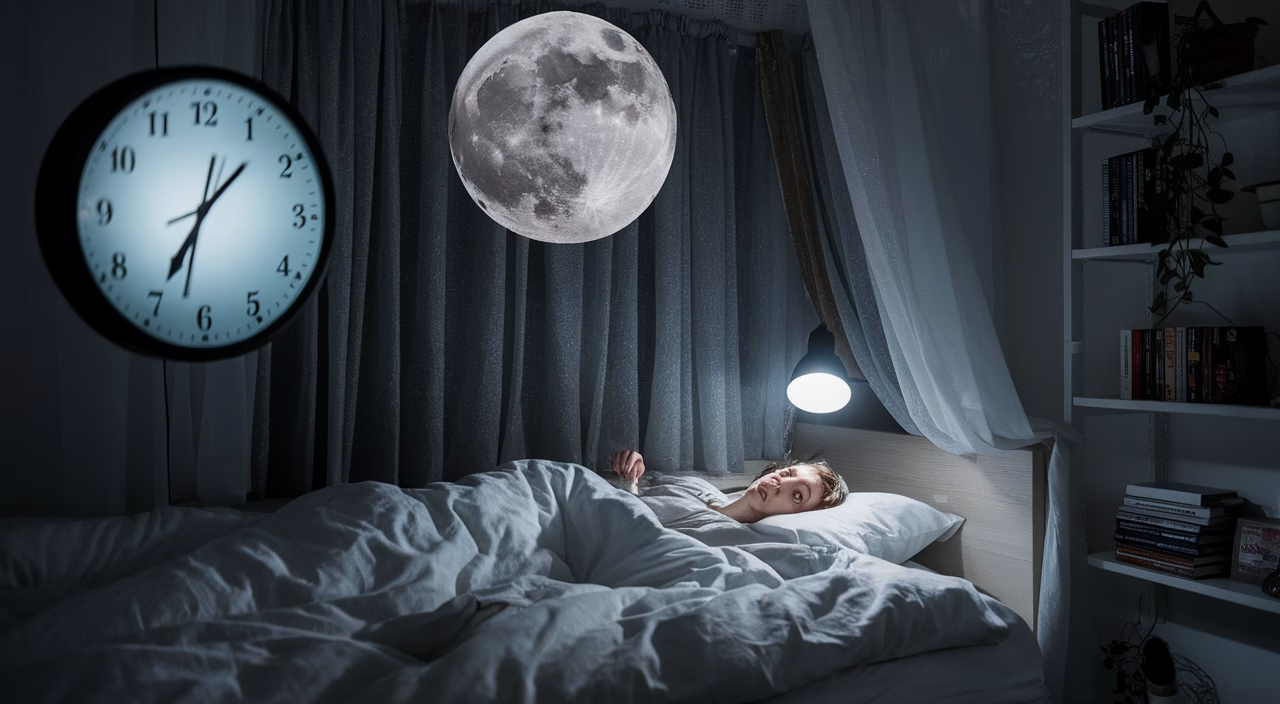
To understand how moon phases affect sleep, we must first examine your circadian rhythm—the finely tuned 24-hour internal clock that governs when you feel sleepy or alert. This rhythm responds to environmental cues, primarily sunlight, but also artificial light sources—and moonlight.
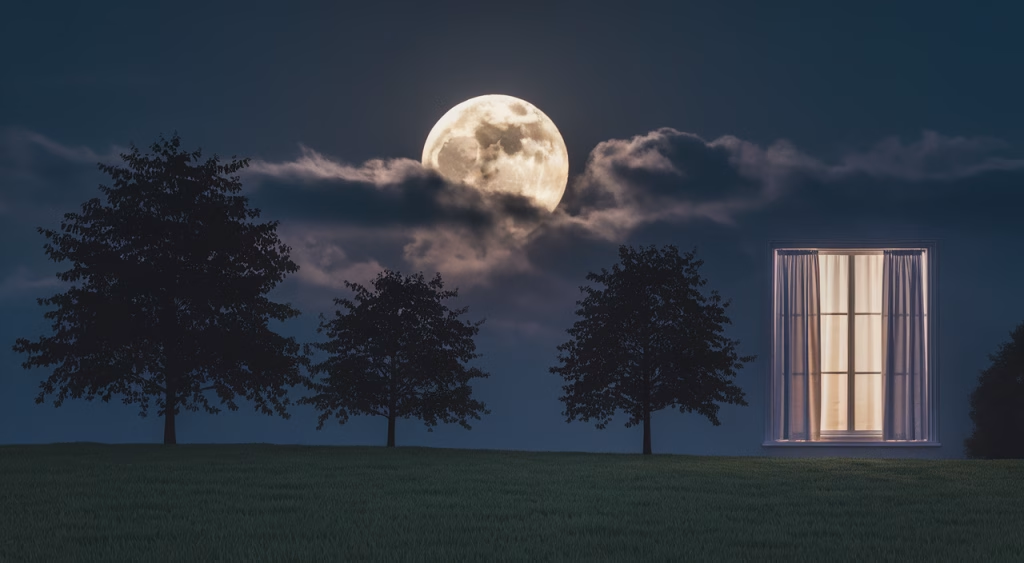
During a full moon, ambient light levels can increase dramatically, particularly for those without blackout curtains. This light exposure—even at low levels—can delay your body’s release of melatonin, the hormone responsible for signaling that it’s time to sleep. When melatonin release is delayed, so is sleep onset, often pushing your bedtime later without realizing why.
Think of your circadian rhythm as a conductor directing an orchestra. When moonlight changes the tempo, even slightly, every ‘instrument’ in your body—your hormones, temperature regulation, and energy levels—can lose sync, affecting your overall sleep quality.
Scientific Explanations Behind Lunar-Induced Sleep Disruptions
What does the science reveal about how moon phases affect sleep?
Multiple studies have found compelling patterns showing lunar cycles disrupt sleep patterns. During a full moon, people commonly experience:
- Delayed sleep onset – on average by 5 to 15 minutes.
- Reduced total sleep time – around 20 fewer minutes of sleep.
- Decreased deep (slow-wave) sleep – important for restoration and memory consolidation.
Interestingly, these sleep disruptions have been documented even in laboratory conditions devoid of moonlight, suggesting something more than ambient light might be at play—possibly an evolutionary adaptation to ancestral moonlight exposure or subtle gravitational influences on our circadian rhythm.
In essence, our biological systems may still subconsciously respond to nighttime lunar cycles, even though modern lighting has insulated us from many natural cues. We remain moon-sensitive creatures, whether or not we realize it.
Tips for Enhancing Sleep During Full Moon Nights
Creating a Sleep-Optimized Environment
If lunar brightness is disrupting your sleep, the first and simplest fix is blocking out that light. Consider these practical sleep environment upgrades to buffer against moon-induced sleep disruptions:
- Invest in blackout curtains that completely block out outside light.
- Use an eye mask to create darkness even if your room isn’t pitch-black.
- Eliminate indirect light sources, like LED glows from electronics or hallway lighting.
- Use warm-toned lighting during your wind-down period to avoid suppressing melatonin production unnecessarily.
- Keep your bedroom cool, quiet, and clutter-free—around 18°C to 22°C is ideal for most sleepers.
Mind-Body Techniques for Better Sleep
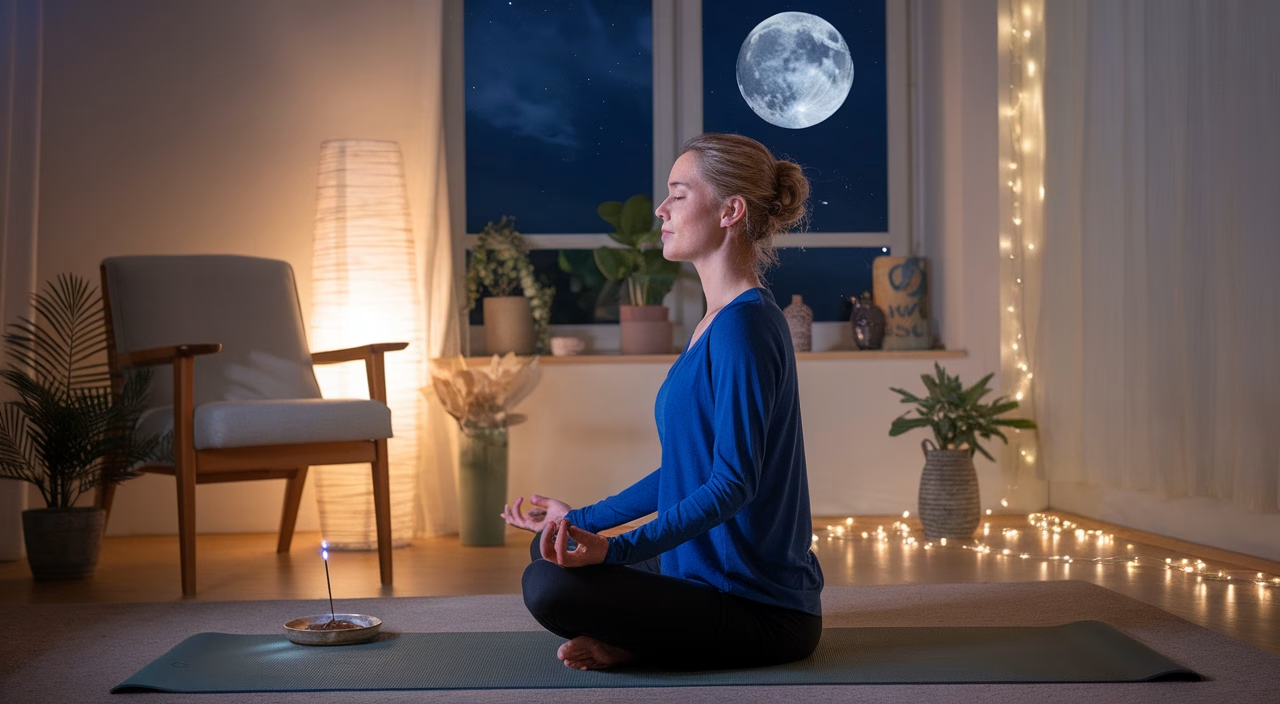
Beyond environmental tweaks, mind-body techniques can help calm your nervous system and prepare your brain for sleep—even when lunar cycles are stirring restlessness.
- Practice mindfulness meditation before bed to reduce rumination and pre-slumber anxiety.
- Try yoga or light stretching to ground excess restless energy often felt during a full moon.
- Use guided sleep visualizations, especially ones themed around nature or lunar cycles, to sync your awareness with relaxing imagery.
- Aromatherapy with essential oils, like lavender or sandalwood, can help initiate parasympathetic (rest and digest) responses.
These rituals create predictable cues for your brain to wind down, helping maintain consistent sleep patterns despite lunar cycles. Think of them as gentle ways to retune your sync with Earth’s rhythms—moonlight and all.
Latest Research and Findings on Moon Phases and Sleep Health
Studies on Lunar Cycles and Sleep Disturbances
The evidence is growing: both recent and older studies consistently show a measurable link between lunar cycles and human sleep patterns. For instance:
- A study by Swiss researchers found a “lunar rhythm” in study participants, even in total darkness. Subjects had 30% less deep sleep and took longer to fall asleep in the days near a full moon.
- Other wide-scale sleep-tracking studies using wearable devices confirm dips in sleep quality and increased wakefulness across various demographics during full moon periods.
- Interestingly, children and women tend to show stronger sleep disruptions during full moons, though the reasons why are still being explored.
The take-home message: modern humans may be far more attuned to natural lunar cycles than we give ourselves credit for, with measurable impacts on our circadian rhythm and sleep quality.
Cost Guide: Tools to Improve Sleep During Lunar Cycles in Singapore
| Solution | Low-End (SGD) | Mid-Range (SGD) | High-End (SGD) |
|---|---|---|---|
| Blackout Curtains | $40 | $100 | $250+ |
| Eye Masks | $5 | $20 | $50 |
| Aromatherapy Diffuser | $15 | $60 | $120 |
| White Noise Machines | $35 | $80 | $200 |
Frequently Asked Questions
Do moon phases really impact everyone’s sleep the same way?
Not exactly. Some people are more sensitive to lunar light or natural rhythms. Genetics, age, and hormone levels can all influence how much the moon affects your sleep.
Are sleep medications effective during full moon disturbances?
They can be, but it’s recommended to start with environmental and behavioral methods first. Medications should be used with professional guidance.
How long do sleep disruptions last around the full moon?
Sleep changes may begin 1-2 days before the full moon and last about 2-3 days after. Tracking your sleep can help gauge your personal cycle.
Is there a difference between the waxing and waning moons?
Some people report lighter sleep during both waxing and waning gibbous phases, but the full moon is particularly disruptive for most.
Can children be affected by moon phases too?
Yes, children—especially younger ones—can be more susceptible. Look for changes in bedtime resistance, mood, and nighttime awakenings.
Does moonlight suppress melatonin like blue light?
Yes, though to a lesser degree. Moonlight and blue-spectrum lighting can delay melatonin production depending on brightness and duration of exposure.
Are there any benefits to sleeping under moonlight?
Moonlight can inspire creativity and emotional introspection, but for sleep, it’s best kept out of the bedroom to protect restfulness.